 Save
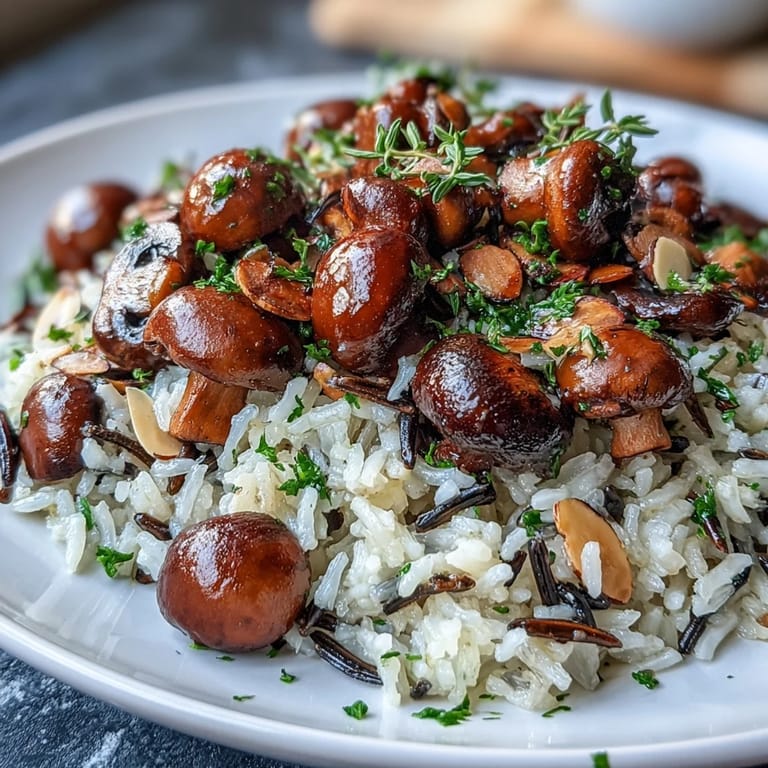
Save There's something about wild rice that makes you slow down in the kitchen. A few years ago, I was standing at my stove on a quiet Tuesday evening, and a friend mentioned she'd never had a truly good pilaf—just the boxed stuff from college days. That comment stuck with me, so I decided to make something from scratch with wild rice and mushrooms I'd picked up at the farmer's market. The house filled with this warm, nutty aroma as everything came together, and I realized how simple it could be to turn basic ingredients into something that felt genuinely special.
I made this for a dinner party last spring where one guest was newly vegetarian and a bit nervous about what she'd actually want to eat. When she took that first bite and asked for seconds, I watched her whole face light up—she genuinely hadn't expected pilaf to taste this good. That moment reminded me that the best dishes aren't always the fanciest ones; they're the ones that quietly prove to people that simple food, made with care, can be exactly what you need.
Ingredients
- Wild rice: This is the star—rinsing it first removes any debris, and it has a chewier texture and deeper flavor than brown or white rice, which is why it matters here.
- Vegetable broth: Use low-sodium so you can control the salt level yourself; the quality of broth really does change the final taste.
- Olive oil: Good olive oil brings a subtle fruity note that complements the earthiness of the mushrooms beautifully.
- Yellow onion, garlic, and celery: This aromatic base is your flavor foundation—don't skip the celery, it adds a brightness that balances the richness.
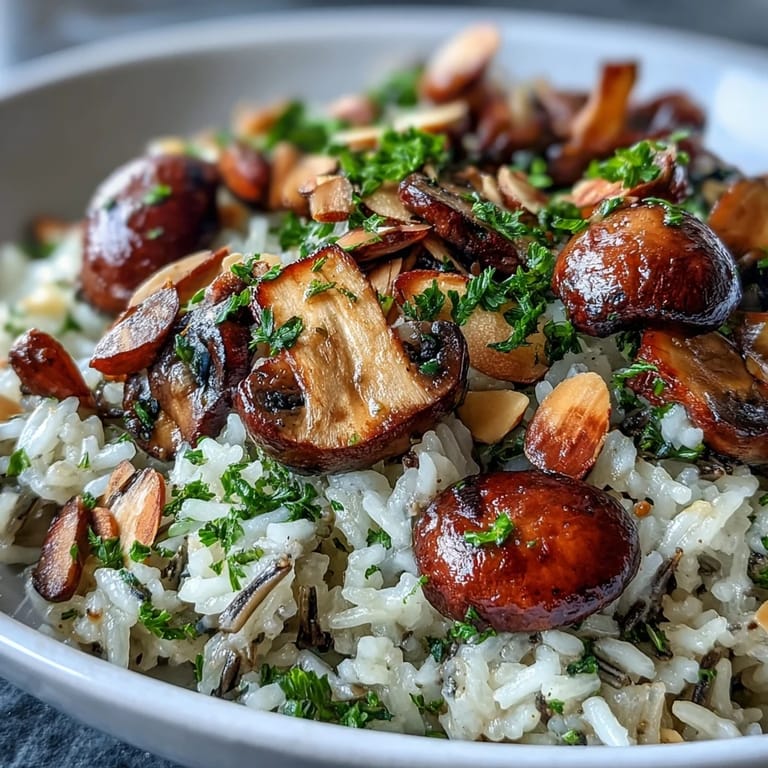
- Cremini or button mushrooms: Cremini have more depth if you can find them, but button mushrooms work just as well and are more budget-friendly.
- Carrot: A diced carrot adds subtle sweetness and a pop of color that makes the finished dish look alive.
- Fresh thyme and bay leaf: Fresh thyme is worth seeking out for this recipe; it smells incredible and tastes cleaner than dried, though dried works in a pinch.
- Fresh parsley: This isn't just garnish—it brightens everything and adds a fresh note right at the end.
- Toasted slivered almonds: Optional, but they add a wonderful crunch and nuttiness that echoes the rice itself.
Tired of Takeout? 🥡
Get 10 meals you can make faster than delivery arrives. Seriously.
One email. No spam. Unsubscribe anytime.
Instructions
- Start your rice cooking first:
- Bring wild rice, broth, and water to a boil in a medium saucepan, then lower the heat and cover it. Let it simmer for 40–45 minutes—the rice will gradually absorb the liquid and become tender, with just a slight firmness in the center that's the whole point of wild rice.
- Build your flavor base:
- While rice cooks, heat olive oil in a large skillet over medium heat and add onion, celery, and carrot. Let them soften for about 5–6 minutes, stirring now and then—you want them to turn translucent and start releasing their sweetness.
- Cook the mushrooms until they're golden:
- Once your aromatics are soft, add minced garlic and sliced mushrooms, cooking for 6–8 minutes while stirring occasionally. Watch as they release their moisture first, then that moisture evaporates and they turn golden and concentrated—that's when you know they're ready.
- Season with intention:
- Stir in fresh thyme, bay leaf, salt, and pepper, cooking for one more minute to wake up the thyme. Remove the bay leaf before the next step.
- Bring it all together:
- Gently fold your cooked wild rice into the mushroom mixture—use a folding motion rather than stirring aggressively so you don't break up the rice grains. Taste and adjust your seasoning; this is your moment to decide if it needs more salt or pepper.
- Finish and serve:
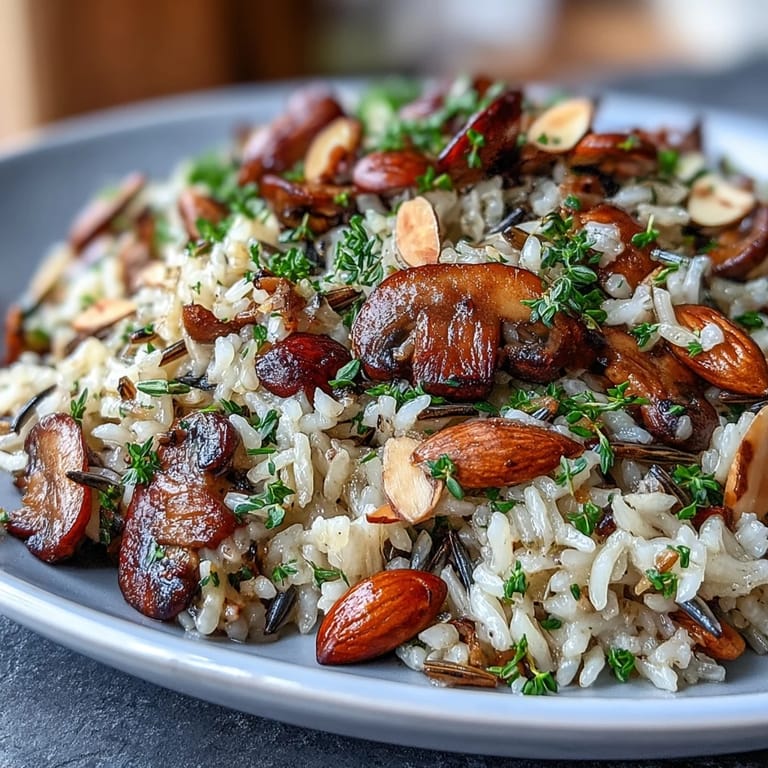
- Transfer to a serving dish, scatter fresh parsley over the top, and add toasted almonds if you're using them. Serve while it's still warm so the rice stays fluffy and the flavors are bright.
 Save
Save One afternoon, my young nephew watched me make this and asked why I was being so careful with the rice at the end. I explained that pilaf is really about respecting each grain—keeping them separate so they stay distinct, not turning into mush. He nodded like it was the most obvious thing in the world, and it made me realize how cooking teaches patience in ways that matter beyond just the food itself.
The Secret of Building Flavor
The magic here isn't in any single ingredient; it's in how you layer them. By sautéing the aromatics first, you're waking them up and releasing their essential oils into the oil itself. Then the mushrooms go in and absorb all of that flavor while their own earthiness develops. Finally, when you add the herbs, they're hitting a skillet full of concentrated flavor instead of just sitting on top of rice. That layering is what separates this from a basic rice dish.
Timing Is Everything
This recipe works beautifully because both the rice and the mushroom mixture take about the same amount of time. You start the rice first, and by the time it's nearly done, your vegetables are perfectly caramelized and ready to combine. It's one of those dishes where the timing feels almost designed to work—like the recipe understands what your kitchen actually needs at any given moment.
Making It Your Own
This pilaf is genuinely flexible, which is part of why I keep coming back to it. Some nights I add a splash of dry white wine when the mushrooms are cooking—it brings this subtle complexity that lingers in the background. Other times I'll mix in a handful of toasted pecans instead of almonds, or add a pinch of smoked paprika for something completely different.
- For extra depth, add that splash of white wine when mushrooms go in and let it cook down before adding herbs.
- Fresh sage works beautifully if you want to swap it for thyme, especially if you're serving this with poultry.
- If almonds aren't your thing, toasted sunflower seeds or walnuts give you that same textural contrast and crunch.
 Save
Save This pilaf has become my answer to the question of what to bring to a potluck when you want something that travels well, reheats beautifully, and somehow makes everyone feel a little more satisfied. It's proof that sometimes the most comforting food is the kind that doesn't try too hard.
Recipe Q&A
- → Can I make wild rice pilaf ahead of time?
Yes, prepare the dish up to 2 days in advance and store in an airtight container in the refrigerator. Reheat gently with a splash of broth or water to restore moisture before serving.
- → What type of mushrooms work best?
Cremini mushrooms offer excellent flavor and texture, but button mushrooms work well too. For more depth, try mixing in shiitake or portobello mushrooms with your chosen variety.
- → Is wild rice gluten-free?
True wild rice is naturally gluten-free, making this pilaf suitable for gluten-free diets. Always verify that your vegetable broth is certified gluten-free to avoid cross-contamination.
- → Can I freeze wild rice pilaf?
This pilaf freezes well for up to 3 months. Cool completely, transfer to freezer-safe containers, and thaw overnight in the refrigerator before reheating.
- → How do I know when wild rice is done?
Wild rice is properly cooked when the grains burst open revealing the white interior, and the texture is tender but still slightly chewy. Most liquid should be absorbed after 40-45 minutes of simmering.
- → What can I serve with wild rice pilaf?
This versatile pilaf pairs beautifully with roasted chicken, turkey, or salmon. It also complements grilled vegetables and stands alone as a filling vegetarian main course.