 Save
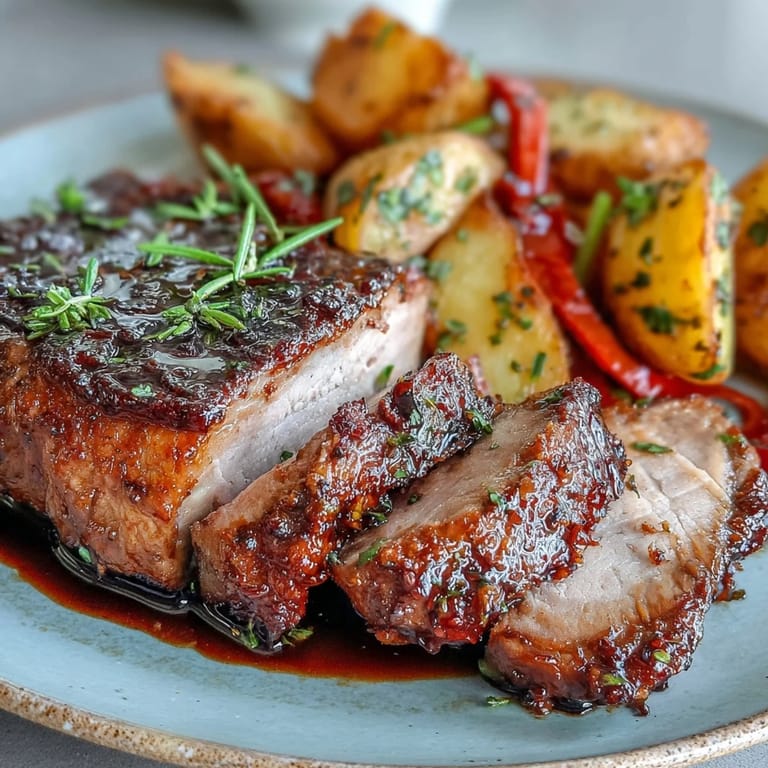
Save There's a particular quiet that settles over the kitchen when you pull a marinated pork fillet from the fridge in the morning, knowing tonight's dinner is already half-done. I learned to marinate Ibérico pork overnight after a hurried weeknight attempt left me with beautifully seared meat that tasted like missed opportunity. The garlic and smoked paprika need those slow, cold hours to work their way into the dense, marbled flesh. Now I start the night before, and by the time the oven preheats, the hard part is already behind me.
I made this for a small dinner party once, and the smell of rosemary and pimentón filling the apartment made everyone arrive hungry and a little impatient. One friend asked if I'd been cooking all day. I hadn't, but I let the oven take the credit. The pork came out of the skillet with a bronze crust, the potatoes were crisp at the edges, and the peppers had gone soft and sweet. It's the kind of dish that makes people assume you're a better cook than you are, which is exactly the kind of recipe I keep close.
Ingredients
- Ibérico pork fillet: This is the star, with its deep flavor and natural marbling that keeps it juicy even under high heat; if you can't find it, regular pork tenderloin works, but expect a leaner, milder result.
- Extra virgin olive oil: Used in the marinade and for searing, it adds fruity richness and helps the spices cling to the meat.
- Garlic: Minced for the marinade and sliced thin for the peppers, it becomes sweet and mellow in the oven rather than sharp.
- Fresh rosemary: Chopped fine so it doesn't overpower, it brings a piney, aromatic backbone that pairs naturally with pork.
- Smoked paprika (pimentón): The thread that runs through the entire dish, adding warmth and a faint smokiness without any actual grilling.
- Lemon zest and juice: Brightens the marinade and cuts through the richness of the pork, keeping everything lively.
- Small new potatoes: Quartered so they crisp up quickly, they soak up the paprika and thyme and turn golden in the oven.
- Red bell peppers: Sweet and soft after roasting, they add color and a gentle counterpoint to the savory pork and potatoes.
- Fresh thyme: Tossed with the potatoes, it adds a subtle earthiness that doesn't compete with the rosemary on the pork.
- Sea salt and black pepper: Simple seasoning that lets the marinade and natural flavors shine without distraction.
Tired of Takeout? 🥡
Get 10 meals you can make faster than delivery arrives. Seriously.
One email. No spam. Unsubscribe anytime.
Instructions
- Marinate the Pork:
- Whisk together the olive oil, garlic, rosemary, smoked paprika, lemon zest, lemon juice, salt, and pepper until it looks like a rusty, fragrant paste. Coat the pork fillet completely, then cover and refrigerate overnight so the flavors sink in deep.
- Prepare the Oven:
- Preheat to 220°C (425°F) and make sure your racks are positioned to fit both trays and the skillet. High heat is what gives the potatoes their crisp edges and the peppers their slight char.
- Roast the Potatoes:
- Toss the quartered potatoes with olive oil, salt, pepper, smoked paprika, and thyme, then spread them in a single layer on a baking tray. Roast for 35 to 40 minutes, stirring once halfway through, until they're golden and crunchy at the tips.
- Roast the Red Peppers:
- On a second tray, toss the pepper strips with olive oil, sliced garlic, and a pinch of salt. Roast for 20 to 25 minutes until they're tender, sweet, and starting to caramelize at the edges.
- Cook the Pork:
- Remove the pork from the marinade and pat it dry with paper towels so it sears instead of steams. Heat a tablespoon of olive oil in an ovenproof skillet over medium-high heat, sear the fillet for 2 to 3 minutes per side until browned, then transfer the whole skillet to the oven and roast for 12 to 15 minutes until the internal temperature hits 63°C (145°F); rest it for 5 minutes before slicing so the juices settle.
- Serve:
- Slice the pork into thick rounds and arrange them on plates with the roasted potatoes and peppers. Drizzle any pan juices over the top for extra richness.
 Save
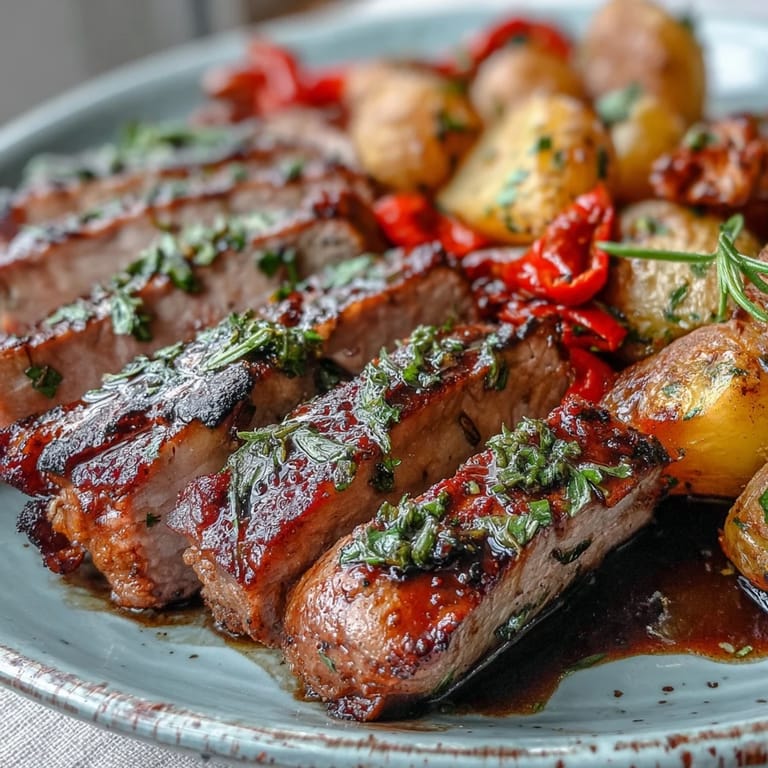
Save The first time I sliced into a rested pork fillet and saw the pale pink center surrounded by that dark, spice-crusted edge, I finally understood why people make such a fuss about proper resting. It's not just technique, it's the difference between a dry disappointment and a tender, juicy centerpiece. Now I set a timer and resist the urge to peek, even when the kitchen smells so good I can barely stand it.
Choosing Your Pork
Ibérico pork is worth seeking out if you can find it; the acorn-fed varieties have a nutty, almost buttery richness that regular pork can't match. That said, a good-quality pork tenderloin will still give you a tender, flavorful result, especially with the overnight marinade doing the heavy lifting. Just keep an eye on the cooking time, since leaner cuts can dry out faster. I've made this with both, and while Ibérico feels like a special occasion, tenderloin is what I reach for on a regular Sunday.
Timing the Roast
The potatoes take the longest, so I get them in the oven first and add the peppers about 15 minutes later. The pork goes in last, which means everything finishes around the same time without any frantic juggling or cold sides. If you're new to roasting multiple things at once, this sequence takes the stress out of it. I keep a small notepad on the counter and jot down the times so I don't have to remember which tray went in when.
Serving and Pairing
This dish doesn't need much beyond what's already on the plate, but a handful of chopped parsley or a squeeze of fresh lemon at the end adds a bright, clean finish. I've served it with a simple green salad dressed in sherry vinegar, and the acidity cuts through the richness of the pork beautifully. A Spanish red wine, something earthy and smooth like a Rioja, feels right, though I've also poured a chilled rosé in summer and no one complained.
- Let guests slice their own pork at the table if you want it to feel more communal and relaxed.
- Leftover pork makes excellent sandwiches the next day, especially with a smear of grainy mustard.
- If you're feeding a crowd, double the recipe and use two skillets or roast the pork on a sheet pan instead.
 Save
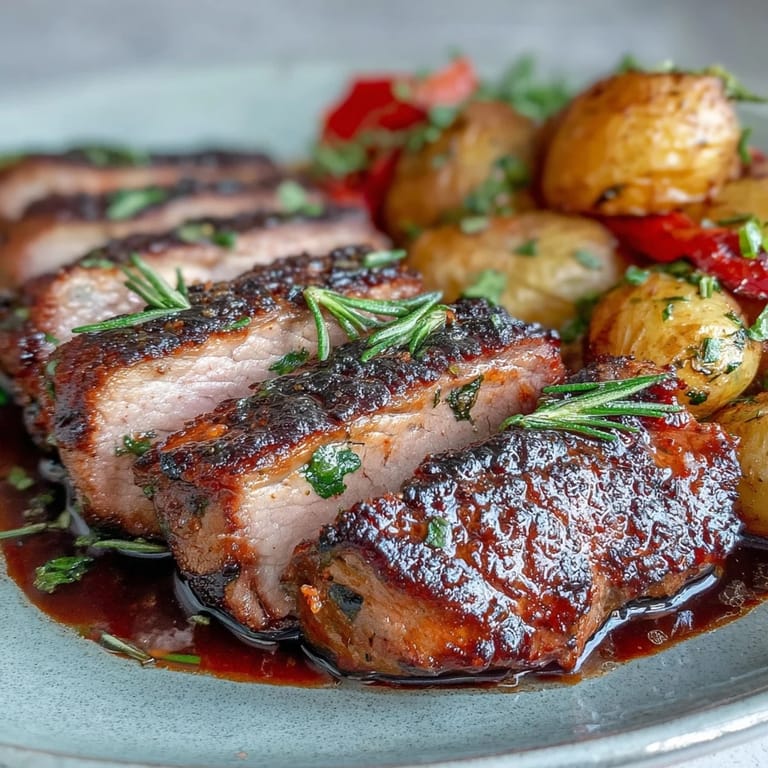
Save There's something deeply satisfying about pulling a single pan of golden potatoes, sweet peppers, and perfectly rested pork out of the oven and knowing dinner is done. It's the kind of meal that feels like a celebration without requiring you to spend the whole day in the kitchen.
Recipe Q&A
- → Can I use regular pork tenderloin instead of Ibérico?
Yes, regular pork tenderloin works well as a substitute. Keep in mind that cooking times may vary slightly, so use a meat thermometer to ensure it reaches 63°C (145°F) internal temperature.
- → How long should I marinate the pork?
Marinate the pork overnight or for a minimum of 8 hours to allow the flavors of rosemary, garlic, and smoked paprika to fully penetrate the meat for maximum tenderness and taste.
- → What temperature should the pork reach when cooked?
The pork fillet should reach an internal temperature of 63°C (145°F) for perfectly juicy, slightly pink meat. Always let it rest for 5 minutes before slicing to retain the juices.
- → Can I prepare the vegetables ahead of time?
Yes, you can cut and season the potatoes and peppers a few hours in advance. Store them covered in the refrigerator, then bring to room temperature before roasting for best results.
- → What wine pairs best with this dish?
A Spanish Rioja or Tempranillo complements the smoky paprika and rich pork beautifully. For white wine lovers, a full-bodied Albariño also works wonderfully with the Mediterranean flavors.
- → How do I know when the potatoes are done?
The potatoes are ready when they're golden brown on the outside and tender inside, typically after 35–40 minutes at 220°C. Stir them halfway through for even crisping.