 Save
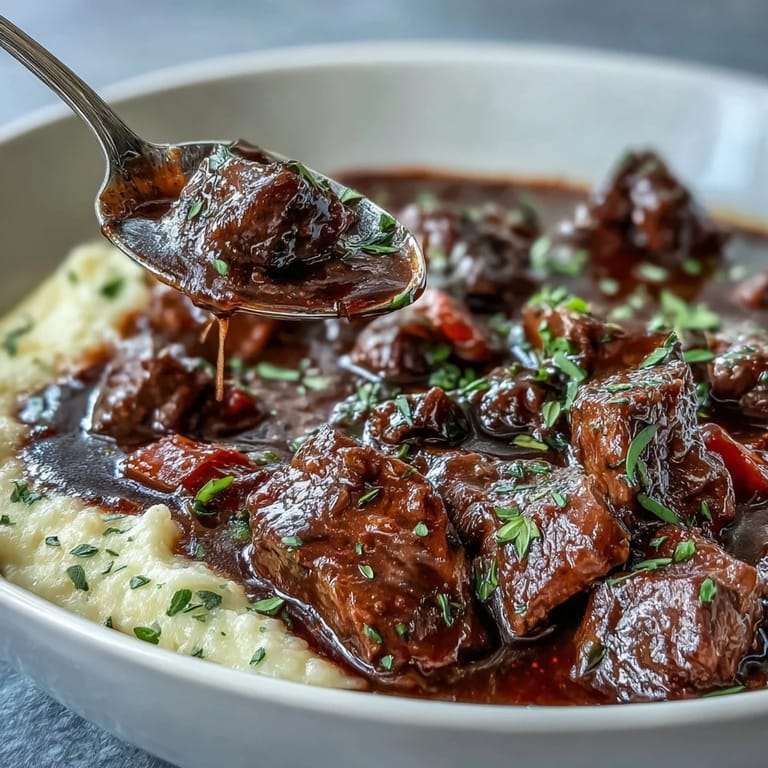
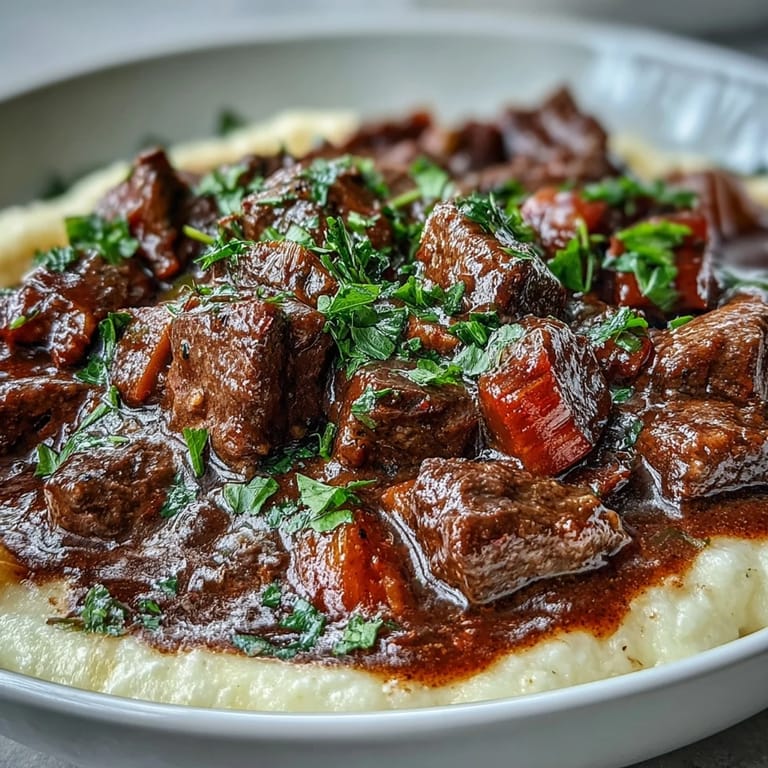
Save My neighbor handed me a bottle of homemade sloe gin one cold November afternoon, insisting I try it in a stew instead of just sipping it by the fire. I was skeptical at first, but the moment that deep berry sweetness hit the pan with the browned venison, I knew something special was happening. The kitchen filled with a scent that was both wild and comforting, like the woods meeting the hearth. I served it that night over polenta, and no one said a word until their bowls were empty. It became my winter signature without me even planning for it.
I made this for a small dinner party on the shortest day of the year, when darkness fell before we even sat down. The stew bubbled away while we lit candles and talked, filling the house with warmth that had nothing to do with the heating. When I ladled it into wide bowls over the polenta, someone said it tasted like a hug from the inside out. That night, the recipe stopped being an experiment and became something I return to every winter when I need to feed people properly.
Ingredients
- Venison shoulder or stewing venison: This cut breaks down slowly into tender, flavorful pieces that soak up every bit of the sauce, so dont rush the browning step.
- Olive oil: Use a good quality one for browning the meat, it helps build the fond that makes the base of your flavor.
- Onion, carrots, and celery: The classic trio that sweetens and deepens as it cooks, forming the backbone of the stew.
- Garlic cloves: Adds a quiet warmth that ties everything together without shouting.
- Tomato paste: A spoonful caramelized in the pan adds umami richness you didnt know you needed.
- Sloe gin: The star ingredient, bringing tart berry notes and a subtle sweetness that makes this stew unforgettable.
- Beef or game stock: Choose a rich, deep stock to support the venison, homemade if you have it.
- Redcurrant jelly: Balances the acidity and adds a glossy finish to the sauce.
- Bay leaves and thyme: Earthy herbs that infuse quietly as the stew simmers.
- Juniper berries: Lightly crushed, they echo the wild character of the venison beautifully.
- Polenta: Quick cooking or regular both work, just stir with care to avoid lumps.
- Whole milk and water: The combination makes the polenta creamy without being too heavy.
- Butter and Parmesan: Stirred in at the end, they transform polenta into pure comfort.
Tired of Takeout? 🥡
Get 10 meals you can make faster than delivery arrives. Seriously.
One email. No spam. Unsubscribe anytime.
Instructions
- Brown the venison:
- Heat olive oil in a heavy casserole over medium high heat and brown the venison in batches, letting each piece develop a deep crust before setting aside. Dont crowd the pan or the meat will steam instead of sear.
- Cook the vegetables:
- Add onion, carrots, and celery to the same pan, letting them soften and pick up all the caramelized bits stuck to the bottom. Stir in garlic and tomato paste, cooking until fragrant and darkened.
- Deglaze with sloe gin:
- Return the venison to the pan and pour in the sloe gin, letting it bubble and reduce for a couple of minutes. The alcohol will cook off, leaving behind a sweet, fruity base.
- Add stock and aromatics:
- Pour in the stock, then stir in redcurrant jelly, bay leaves, thyme, and crushed juniper berries. Season with salt and pepper, then bring everything to a gentle simmer.
- Simmer low and slow:
- Cover the pan and let it cook on low heat for two hours, stirring occasionally to make sure nothing sticks. The venison should become so tender it nearly falls apart.
- Make the polenta:
- While the stew simmers, heat milk and water in a saucepan until just below boiling. Gradually whisk in the polenta, stirring constantly to avoid lumps, and cook until thick and creamy.
- Finish the polenta:
- Stir in butter and Parmesan, tasting and adjusting salt as needed. The texture should be smooth and spoonable, not stiff.
- Serve hot:
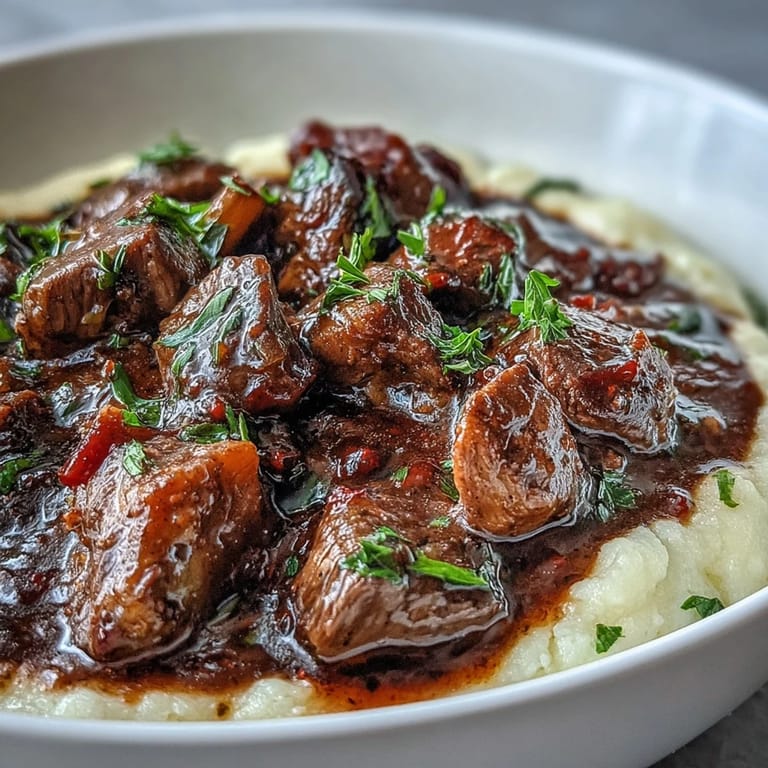
- Remove bay leaves and thyme sprigs from the stew, then ladle it generously over bowls of creamy polenta. Garnish with a little fresh parsley or thyme if you like.
 Save
Save The first time I reheated leftovers the next day, I realized this stew actually improves overnight as the flavors meld and deepen. I stood at the stove with a spoon, tasting straight from the pot, and had to stop myself from eating it all before dinner. Now I deliberately make extra, knowing the second day will be even better than the first.
Choosing Your Venison
Venison shoulder is ideal for slow cooking because it has enough marbling to stay moist and flavorful through the long simmer. If you can only find leaner cuts like haunch, add a splash more stock or a little extra butter to compensate. Wild venison has a stronger, gamier flavor than farmed, so adjust your sloe gin or redcurrant jelly slightly if you want to soften that edge. I once used diced venison leg and it worked beautifully, just needed an extra twenty minutes of cooking time. Ask your butcher to cube it for you if youre short on time, they usually dont mind.
Polenta Pointers
Quick cooking polenta saves time without sacrificing much texture, but if you have traditional polenta and half an hour to spare, the result is noticeably creamier. I learned the hard way to add polenta in a slow stream while whisking constantly, dumping it all at once creates clumps you will never smooth out. If your polenta gets too thick, whisk in a splash of warm milk or water until it loosens to the consistency you want. Some people like it firm enough to slice, but for this stew, I prefer it soft and spoonable so it mingles with the sauce. Leftover polenta sets firm in the fridge and can be sliced and griddled for breakfast, which is a happy accident I discovered by chance.
Serving and Storing
This stew keeps beautifully in the fridge for up to three days and freezes well for up to three months, though I recommend freezing it without the polenta. Reheat gently on the stove, adding a splash of stock if it has thickened too much overnight. The polenta is best made fresh, but if you must make it ahead, store it separately and reheat with a little milk, whisking until smooth again. I like to serve this in wide, shallow bowls so the polenta can spread out and catch all the rich sauce.
- Garnish with fresh parsley or a sprig of thyme for a pop of color and freshness.
- Pair it with a robust red wine like Shiraz or Cabernet Sauvignon to match the richness.
- Offer crusty bread on the side for anyone who wants to mop up every last bit of sauce.
 Save
Save This is the kind of dish that makes winter feel less like endurance and more like a season worth celebrating. I hope it fills your kitchen with the same warmth it brought to mine.
Recipe Q&A
- → Can I substitute the venison with another meat?
Yes, beef chuck or lamb shoulder work well as alternatives. Adjust cooking time as needed—beef may require 2.5-3 hours, while lamb cooks similarly to venison.
- → What if I don't have sloe gin?
Port, damson gin, or a berry liqueur like crème de cassis make excellent substitutes. You can also use red wine with a tablespoon of blackberry jam for similar depth.
- → Can I make this ahead of time?
Absolutely. The stew actually improves when made a day ahead, allowing flavors to meld. Reheat gently and prepare fresh polenta just before serving.
- → How do I know when the venison is tender enough?
The meat should easily break apart with a fork and feel very soft when pressed. If still tough after 2 hours, continue cooking in 30-minute increments.
- → Can I use instant polenta instead of regular?
Yes, instant polenta works perfectly and cooks in just 5 minutes. Follow package directions but still add the butter and Parmesan for creaminess.
- → What sides pair well with this dish?
Steamed green beans, roasted root vegetables, or a simple arugula salad complement the rich stew beautifully without overwhelming the plate.