 Save
Save There's something about the smell of teriyaki sauce bubbling in a pan that makes everything feel like dinner service at a proper restaurant, even if you're just cooking on a Tuesday night in your own kitchen. I discovered this bowl years ago when my friend brought leftovers to work and the whole office smelled like caramelized soy sauce and ginger for hours afterward. She wouldn't share the recipe until I promised to make it for her birthday dinner, which is how I learned that the secret isn't just the sauce—it's understanding when to let things brown properly and when to keep moving. Now it's become my go-to when I want something that tastes impressive but doesn't require a PhD in cooking.
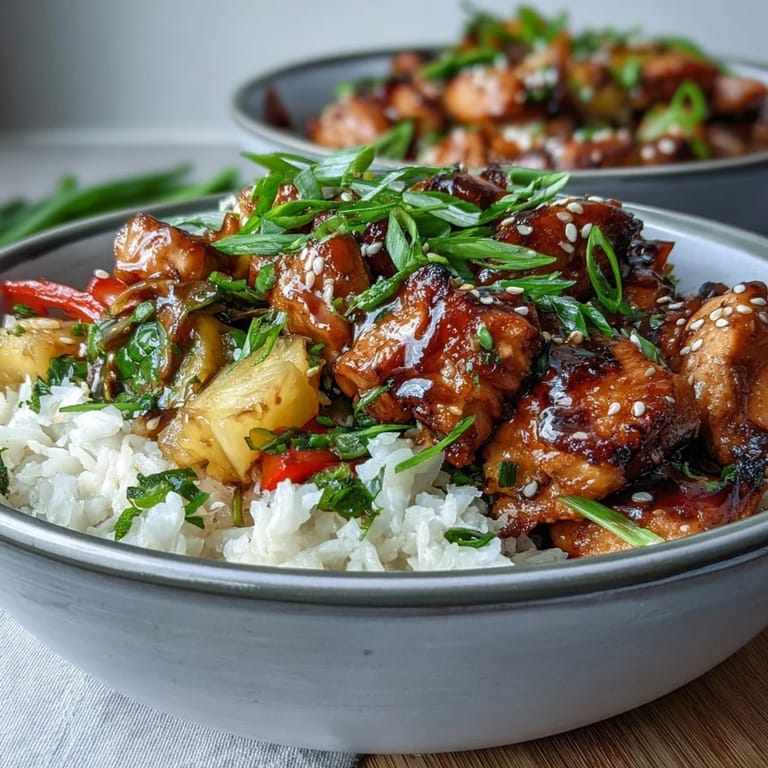
I made this for my partner's work friends one Friday evening, and I remember standing at the stove watching the chicken caramelize while they played cards in the living room, occasionally peeking in with that hungry look. When I called everyone to the table, someone said the pineapple on top seemed weird until they took one bite and suddenly got it—how the sweetness plays against the salty sauce and the green vegetables. That moment of watching people's faces shift from skeptical to satisfied taught me something about taking risks with flavor combinations.
Ingredients
- Boneless, skinless chicken thighs or breasts (1.5 lbs): Thighs stay juicier than breasts if you're not watching the clock obsessively, though either works—just cut everything into consistent bite-sized pieces so nothing cooks faster than anything else.
- Soy sauce (1/3 cup): This is the backbone of the whole thing, so don't reach for the cheap bottle if you can help it, and definitely check the label if you need gluten-free.
- Mirin (1/4 cup): If you can't find it, a mix of sugar and a tiny splash of rice vinegar works, but mirin has a roundness to the sweetness that's hard to replicate.
- Brown sugar and honey (2 tbsp each): The combination of these two gives the sauce depth—honey adds glossiness, brown sugar adds that slight molasses warmth.
- Rice vinegar (1 tbsp): Just enough to keep everything from being cloyingly sweet and to brighten up the heavier flavors.
- Garlic and ginger (2 cloves and 1 tsp): Fresh is non-negotiable here because you'll taste the difference in the brightness they bring.
- Sesame oil (1 tsp): A small amount goes a long way, and it's what makes this taste like someone who knows what they're doing made it.
- Cornstarch slurry (1 tbsp cornstarch + 2 tbsp water): This is your thickening trick that turns sauce into glaze—make sure to stir it well before adding or you'll get lumps.
- Jasmine or short-grain white rice (2 cups): Long-grain rice gets too fluffy and separate, but short-grain holds together and catches the sauce better.
- Broccoli, carrots, bell pepper, and snap peas: Cut everything thin so it cooks quickly and evenly—thick carrot slices will still be hard when everything else is done.
- Fresh pineapple (1 cup diced): The acidity and sweetness are what pull the whole bowl together, and frozen pineapple gets mushy when the warm sauce hits it.
- Scallions and sesame seeds: These are the finishing touches that make people think you spent way more time on this than you actually did.
Tired of Takeout? 🥡
Get 10 meals you can make faster than delivery arrives. Seriously.
One email. No spam. Unsubscribe anytime.
Instructions
- Rinse and start the rice:
- Get your rice under cold running water and swish it around with your fingers until the water stops looking cloudy—this removes excess starch so each grain stays distinct. Combine the rinsed rice with 3 cups of water and a pinch of salt in a saucepan, bring it to a boil, then cover and drop the heat to low for 15 minutes.
- Build your teriyaki sauce:
- While the rice is going, whisk together soy sauce, mirin, brown sugar, honey, rice vinegar, minced garlic, grated ginger, and sesame oil in a small bowl. The sauce should smell deeply savory with a hint of sweetness—taste it and trust your instincts if something feels off.
- Get the chicken ready:
- Cut your chicken into pieces that are all roughly the same size, then place them in a bowl and pour half the teriyaki sauce over them. Let it sit for at least 10 minutes while you prep everything else—marinating is when flavor really gets a chance to stick.
- Stir-fry the vegetables:
- Heat a large skillet or wok over medium-high heat until it's properly hot (you should see heat shimmer above the oil when you add it), then toss in your thinly sliced vegetables. Keep everything moving for 3 to 4 minutes until the vegetables are still crisp but no longer raw, then remove them and set aside—they'll keep cooking slightly as they cool.
- Brown and cook the chicken:
- In the same hot pan, add your marinated chicken pieces and let them sit undisturbed for a minute or two so they get a proper golden crust. Stir occasionally for 6 to 8 minutes until everything is cooked through and the outside looks caramelized.
- Create the glaze:
- Pour in the remaining teriyaki sauce and stir it together with the chicken. Mix your cornstarch with 2 tablespoons of water until smooth, then pour that into the pan while stirring constantly and watch it transform into a glossy, thick sauce over 2 to 3 minutes of gentle simmering.
- Assemble your bowls:
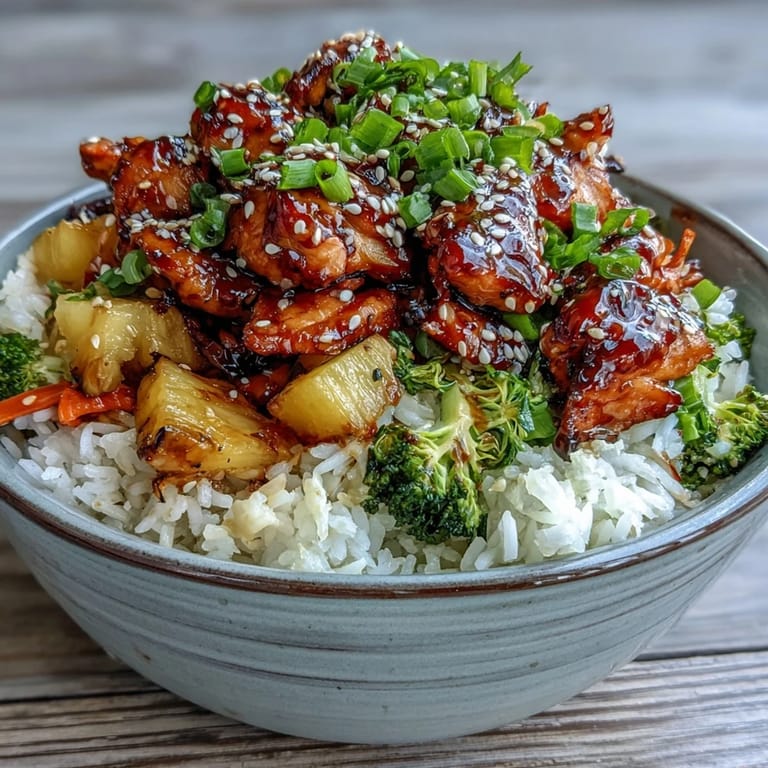
- Fluff the cooked rice with a fork, divide it among bowls, then top each one with a portion of the glazed chicken, the stir-fried vegetables, and a handful of fresh pineapple. Finish with a sprinkle of scallions and toasted sesame seeds for color and texture.
 Save
Save My grandmother tasted this for the first time at my apartment and said it reminded her of a teriyaki place she and my grandfather used to go to in the 70s, except somehow more homemade. She asked if I'd make it again the next time she visited, which meant something—she wasn't usually impressed by my cooking before that day.
The Secret to Perfect Teriyaki Glaze
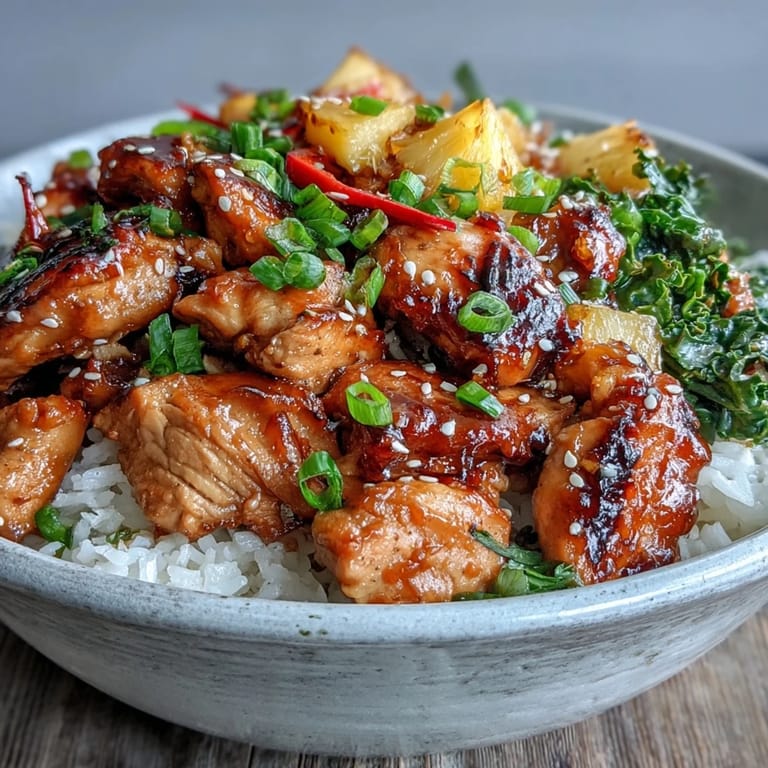
The magic happens in those last few minutes when the sauce coats the chicken and gets thick and shiny. If your sauce is too thin, the cornstarch slurry is your friend, but if it's too thick and gluey, thin it out with a tablespoon of water at a time. The glaze should cling to each piece of chicken but still flow when you tilt the bowl—that's the sweet spot.
Making This Bowl Your Own
This recipe is a starting point, not a prison sentence. Swap the chicken for tofu if you're vegetarian, or throw in mushrooms, zucchini, or baby corn if that's what's in your crisper. Some people drizzle sriracha or chili oil on top for heat, others pair it with a crisp white wine like Sauvignon Blanc. The backbone of the recipe is solid enough that you can build whatever version calls to you that night.
Timing and Temperature Tips
The key to not feeling rushed is getting your rice started first since it needs 25 minutes total. While that's cooking, prep all your vegetables and make your sauce so when you actually turn on the skillet, everything else is ready to go. Temperature matters more than you'd think—if your pan isn't hot enough when you add the chicken, it'll steam instead of brown, and that's where so much flavor comes from.
- Always cut chicken into pieces that are similar in size so nothing finishes cooking before anything else.
- Let your vegetables cool slightly after cooking them so they stay crisp instead of getting soggy from the hot sauce.
- Taste the teriyaki sauce before marinating the chicken and adjust the sweetness or saltiness to your preference.
 Save
Save This bowl has become my version of comfort food—not because it's heavy or nostalgic, but because it tastes like confidence and care in equal measure. Make it for yourself on a regular Tuesday or for people who matter, and watch how a simple bowl of rice and chicken becomes something worth talking about.
Recipe Q&A
- → Can I use chicken breasts instead of thighs?
Yes, chicken breasts work well in this dish. Cut them into similar bite-sized pieces, though they may cook slightly faster than thighs. Adjust cooking time to 5-6 minutes to prevent drying.
- → What can I substitute for mirin?
You can replace mirin with equal parts dry sherry or white wine mixed with a pinch of sugar. For a non-alcoholic option, use additional rice vinegar with a teaspoon of extra sugar.
- → How do I store leftovers?
Store components separately in airtight containers in the refrigerator for up to 4 days. Reheat the chicken and vegetables gently in a skillet, adding a splash of water if the sauce thickens too much.
- → Is this dish gluten-free?
The dish can be made gluten-free by using tamari or coconut aminos instead of soy sauce. Ensure all other ingredients, including the cornstarch, are certified gluten-free.
- → Can I make the sauce ahead of time?
Absolutely. Prepare the teriyaki sauce up to 5 days in advance and store it in the refrigerator. The cornstarch slurry should be mixed fresh when cooking.
- → What other proteins work with this teriyaki glaze?
The versatile sauce pairs beautifully with salmon, shrimp, beef strips, or tofu. Adjust cooking times accordingly based on your protein choice.