 Save
Save My neighbor dropped off a container of homemade gochujang last spring, and I had no idea what to do with it until I threw together ground beef, soy sauce, and brown sugar one weeknight when everyone was hungry and impatient. The smell hit different—savory, slightly sweet, with this underlying heat that made my kitchen feel alive. That bowl changed how I cook on busy nights, and now my kids actually ask for it by name.
I made this for a potluck once and brought it in a slow cooker, worried it would sit there untouched while everyone crowded around the casseroles. Instead, people kept coming back for thirds, and someone actually asked if I'd started a restaurant. That moment taught me that simple, bold flavors beat complicated recipes every single time.
Ingredients
- Lean ground beef (1 lb): Use 85/15 or 90/10 if you can find it—the fat renders into the sauce and tastes incredible, but too much grease means you'll need to drain it halfway through cooking.
- Gochujang (2 tablespoons): This Korean chili paste is the soul of the dish; it's spicy but not overwhelming, with a fermented depth that store-bought sriracha just can't match.
- Low-sodium soy sauce or tamari (3 tablespoons): Tamari is your friend if gluten matters to you, and honestly, it's become my default anyway because the flavor feels cleaner.
- Brown sugar (2 tablespoons): This balances the heat and salt—don't skip it or oversimplify with white sugar, the molasses notes actually change everything.
- Sesame oil (1 tablespoon): A little goes a long way; toasted sesame oil smells like someone's grandmother's kitchen in the best way possible.
- Garlic and ginger (2 cloves and 1 teaspoon): Fresh is non-negotiable here—jarred versions taste like sadness compared to the real thing.
- Rice vinegar (1 tablespoon): This adds brightness and prevents the sauce from being one-note; it's the secret ingredient people taste but can't name.
- Black pepper (1/2 teaspoon): Freshly ground makes a real difference, though I won't judge you for using pre-ground.
- Rice or cauliflower rice (4 cups cooked): Regular rice is comfort; cauliflower rice is practical—pick whichever mood you're in.
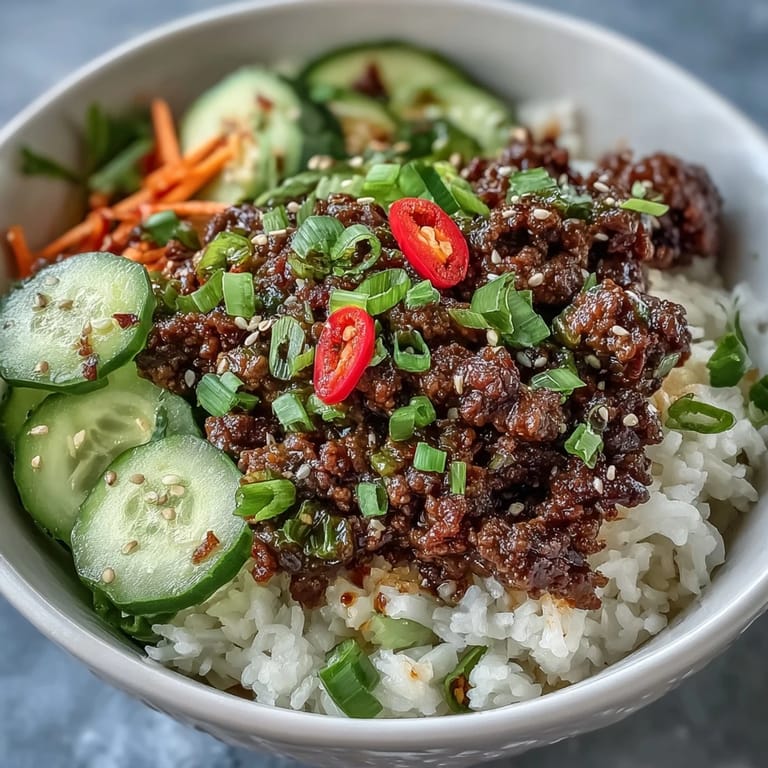
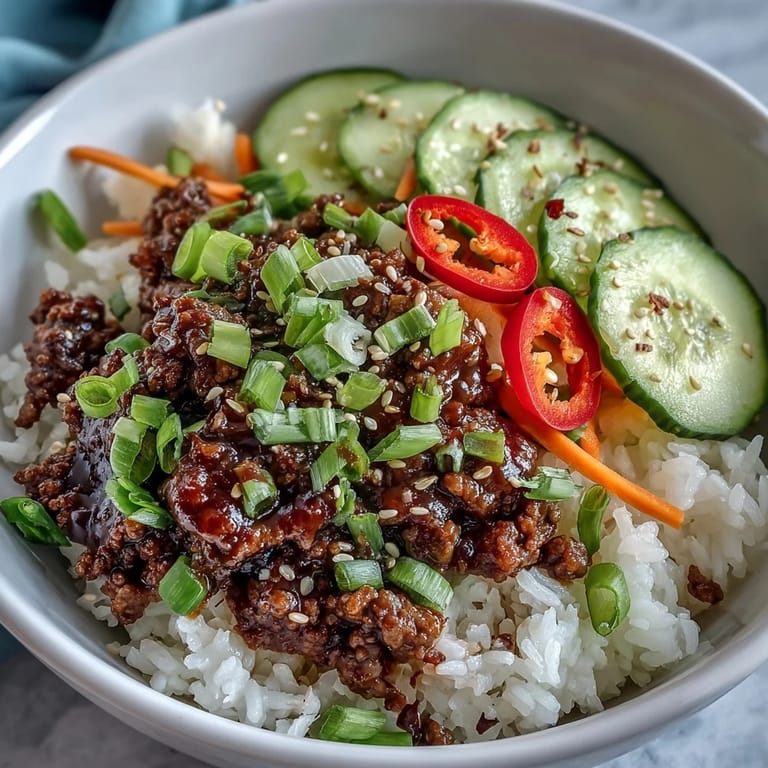
- Fresh toppings (cucumber, carrot, green onions, sesame seeds): These aren't just decoration—they add crunch and freshness that makes each bite interesting and keeps the dish from feeling heavy.
Tired of Takeout? 🥡
Get 10 meals you can make faster than delivery arrives. Seriously.
One email. No spam. Unsubscribe anytime.
Instructions
- Heat your skillet and brown the beef:
- Get the sesame oil shimmering over medium-high heat, then add the ground beef and let it sit for a moment before breaking it up—this gives it color and develops real flavor. After 4 to 5 minutes, it should look caramelized at the edges, not pale and tired.
- Wake up the aromatics:
- Toss in your minced garlic and grated ginger, stirring constantly for about a minute. You'll know it's right when the smell makes you stop and take a deep breath—that's the signal to move forward.
- Build the sauce:
- Add gochujang, soy sauce, brown sugar, rice vinegar, and pepper all at once, stirring to coat every piece of beef. The mixture will smell intense and delicious, and after 2 to 3 minutes of simmering, it'll thicken slightly and start clinging to the meat like it was meant to be together.
- Taste and adjust:
- This is when you become the boss of your own dish—add more gochujang if you want heat, more sugar if it tastes too aggressive, more vinegar if it needs brightness. Trust your mouth.
- Assemble your bowls:
- Divide warm rice or cauliflower rice among bowls, then crown each one with a generous portion of the beef and all its gorgeous sauce. This is where the dish gets personal—how much meat, how much rice, that's up to you.
- Garnish like you mean it:
- Scatter cucumber, carrot, green onions, and sesame seeds over the top; if you're feeling bold, add sliced red chili or a spoonful of kimchi. These fresh elements cut through the richness and make the whole thing feel bright and balanced.
 Save
Save One rainy evening, my partner came home exhausted from work, and I had this bowl ready in the time it took them to change clothes. Watching them eat something that tasted like actual effort, made with actual care, but took barely any of my time—that's when I realized this recipe was doing something more than feeding people. It was saying, "I see you, and you deserve something good."
The Magic of Balance
What makes this dish work is the conversation between spicy, sweet, salty, and sour—none of them shouting louder than the others. The gochujang brings heat and funk, the brown sugar brings warmth, the soy sauce brings salt and umami, and the rice vinegar brings a little shimmer that makes everything taste fresher. It's like a band where every instrument gets to play; if you skip one, the whole thing sounds wrong. I've tried making it without the vinegar before, thinking it wouldn't matter, and the bowl just felt flat and one-dimensional. Now I treat that tablespoon like the secret handshake it is.
Why Fresh Toppings Actually Matter
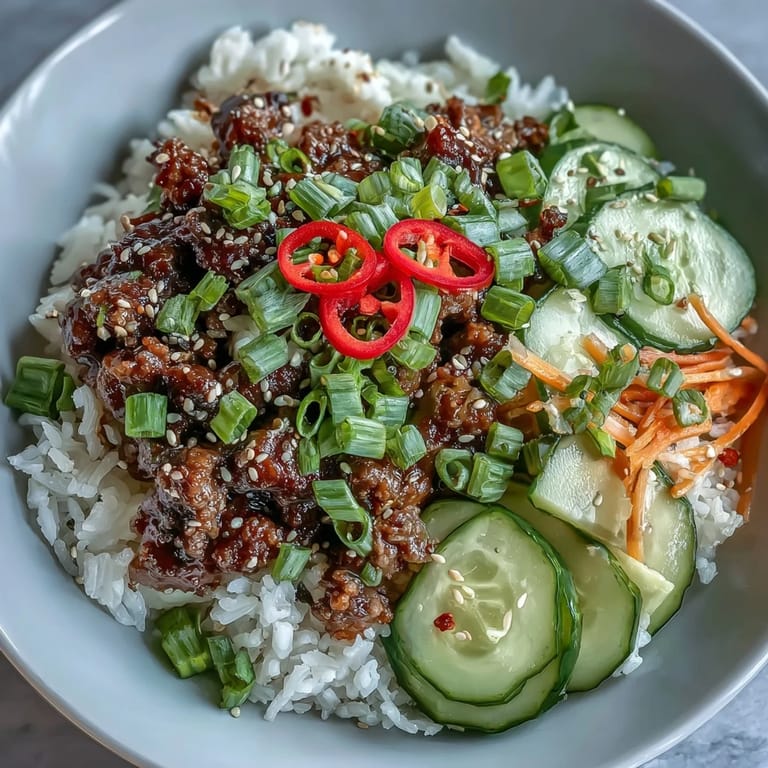
It's easy to look at the cucumber, carrot, and green onions and think they're optional extras, but they're actually structural to how this dish tastes. Biting into cool, crisp vegetables after a mouthful of rich, spicy beef creates this wonderful contrast that keeps you coming back for more instead of feeling satisfied after three bites. The sesame seeds add a subtle toasted crunch, and if you're brave enough to add fresh chili, it layers heat on top of the gochujang heat in a way that feels intentional instead of overwhelming. I learned this when I made the bowl for someone who picked off all the toppings—they were basically eating a spicy meat sauce over rice, and their whole experience was different. Fresh matters.
Making It Your Own
The beauty of this bowl is that it's forgiving enough to play with. Some weeks I use ground turkey or chicken if I'm trying to be lighter, and the sauce still tastes incredible because the flavor is so bold. Other times, I'll crisp up the beef extra hard and serve it over cauliflower rice to make it feel low-carb, and honestly, the contrast between the warm, saucy meat and the nutty cauliflower rice is something I keep coming back to. If kimchi is sitting in your fridge, add it—the funk and fermentation will talk to the gochujang in ways that feel right. This is your bowl to build, and the only rule is tasting as you go.
- Swap proteins freely—turkey, chicken, pork, or even crumbled tofu all work beautifully with this sauce.
- Add an egg if you're feeling it, or make it a Buddha bowl by throwing in roasted broccoli or snap peas.
- Leftover sauce keeps for days and is secretly amazing on roasted vegetables, scrambled eggs, or tomorrow's lunch.
 Save
Save This bowl has become my answer to the question "What's for dinner?" when I want something that tastes like I tried but doesn't ask me to spend the evening in the kitchen. It's the kind of meal that makes people happy without making you stressed.
Recipe Q&A
- → Can I make this dish ahead of time?
The beef mixture stores well in the refrigerator for 3-4 days. Reheat gently in a skillet or microwave. Add fresh toppings just before serving for the best texture and flavor.
- → Is gochujang very spicy?
Gochujang offers moderate heat with a sweet, fermented flavor. The spice level is milder than fresh chilies but provides a pleasant warmth. You can adjust the amount to your preference.
- → Can I use other meats besides beef?
Ground turkey or chicken work well as lighter alternatives. Adjust cooking time slightly as poultry may cook faster than beef. The sauce flavors complement both meats beautifully.
- → What makes this gluten-free?
Use tamari instead of soy sauce and ensure your gochujang is certified gluten-free. Serve over cauliflower rice instead of regular rice for a completely gluten-free bowl.
- → What can I serve with this beef bowl?
Kimchi adds authentic flavor and probiotics. Steamed bok choy, pickled vegetables, or a simple cucumber salad make excellent sides. The bowl is satisfying on its own as a complete meal.