 Save
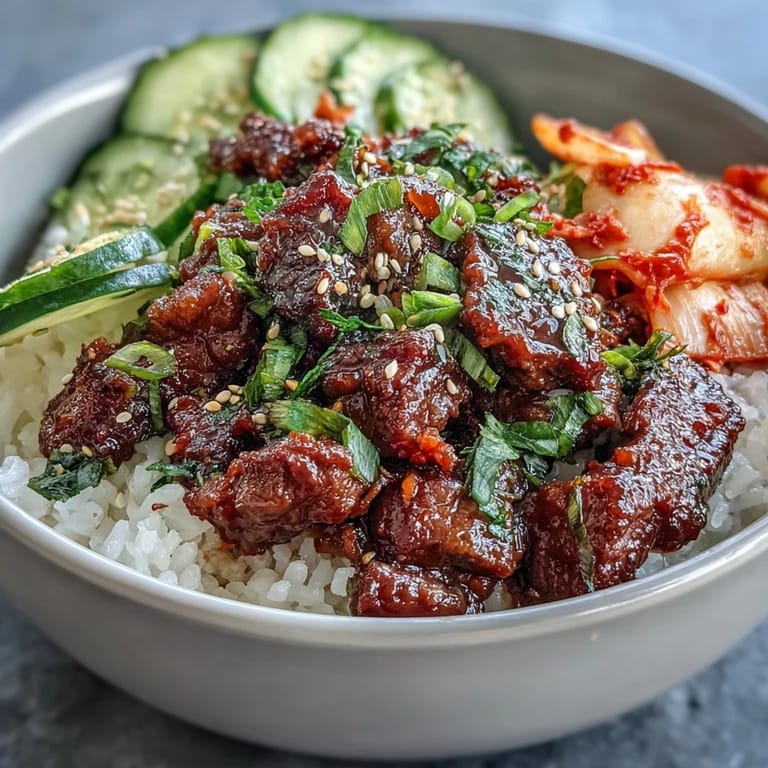
Save My coworker brought a Korean beef bowl to lunch one day, and I watched her eat it with such focused contentment that I had to ask for the recipe. She laughed and said it took her maybe thirty minutes total, which seemed impossible given how complex the flavors tasted. That afternoon, I stopped at the Korean market and grabbed a jar of gochujang, came home, and made it for dinner. The kitchen filled with this warm, spicy-sweet aroma that made my roommate appear in the doorway within minutes, asking what smelled incredible.
I made this for a small dinner party where my friend mentioned she'd been craving bold flavors, and watching four people silently focus on their bowls while steam rose from the rice was its own kind of satisfaction. Someone asked if I'd been secretly studying Korean cooking, and I got to tell them the honest story of a lunch box and thirty minutes.
Ingredients
- Lean ground beef (1 lb): Look for meat that's not too fatty since you'll be making a sauce with it, and the fat will render out as the beef cooks and seasons.
- Vegetable oil (2 tbsp): Use something neutral that can handle medium-high heat without smoking or adding competing flavors.
- Garlic and ginger (3 cloves and 1 tbsp): Fresh is non-negotiable here because they're the aromatic foundation that makes the sauce smell incredible before the gochujang even hits the pan.
- Gochujang (3 tbsp): This Korean chili paste is the soul of the dish, bringing heat and umami depth that you really can't replicate with other ingredients.
- Soy sauce, brown sugar, rice vinegar, and sesame oil: These four ingredients work together to balance the gochujang's heat with sweetness, tanginess, and nutty richness.
- Green onions (2, thinly sliced): Save some for garnish because the fresh, sharp bite at the end completely elevates the final bowl.
- Rice vinegar, sugar, and salt (for pickling): This quick brine is what transforms raw vegetables into something bright and crunchy that cuts through the richness of the beef.
- Cooked white or brown rice (4 cups): The rice is your canvas here, so make sure it's freshly cooked and still warm when you build the bowl.
- Cucumber, radish, and kimchi (for serving): These toppings aren't just sides, they're the textural and flavor counterbalance that makes this bowl feel complete and refreshing.
- Toasted sesame seeds (1 tbsp): Toast them yourself if you can because the difference between store-bought and fresh-toasted is genuinely noticeable.
Tired of Takeout? 🥡
Get 10 meals you can make faster than delivery arrives. Seriously.
One email. No spam. Unsubscribe anytime.
Instructions
- Start the pickle while everything else waits:
- Combine rice vinegar, sugar, and salt in a small bowl and stir until the sugar and salt completely dissolve. This step matters because the vegetables need time to absorb the brine and develop that crisp-tender texture. Toss in your julienned carrot and daikon radish, give it a good mix, and let it sit while you tackle the beef.
- Get the aromatics fragrant:
- Heat your vegetable oil in a large skillet over medium-high heat, then add minced garlic and grated ginger. Let them sizzle for exactly one minute, and you'll know they're ready when the smell hits you all at once. Don't skip this step or rush it because this is where the flavor foundation gets built.
- Brown the beef properly:
- Add your ground beef to the pan and use a wooden spoon to break it into small pieces as it cooks. Cook for five to six minutes, stirring occasionally, until the meat is browned and no longer pink inside. If there's a significant amount of fat pooled in the pan, drain it off now so your sauce isn't greasy.
- Make the sauce come alive:
- Stir in gochujang, soy sauce, brown sugar, rice vinegar, and sesame oil all at once. The mixture will look loose at first, but it'll thicken as it simmers for two to three minutes and the flavors meld together. You'll notice the sauce getting glossy and coating the beef beautifully, which is when you know it's ready.
- Finish with fresh green onions:
- Remove the pan from heat and stir in half of your sliced green onions. Hold the other half back for the final garnish because the fresh, raw bite makes a difference.
- Build your bowls with intention:
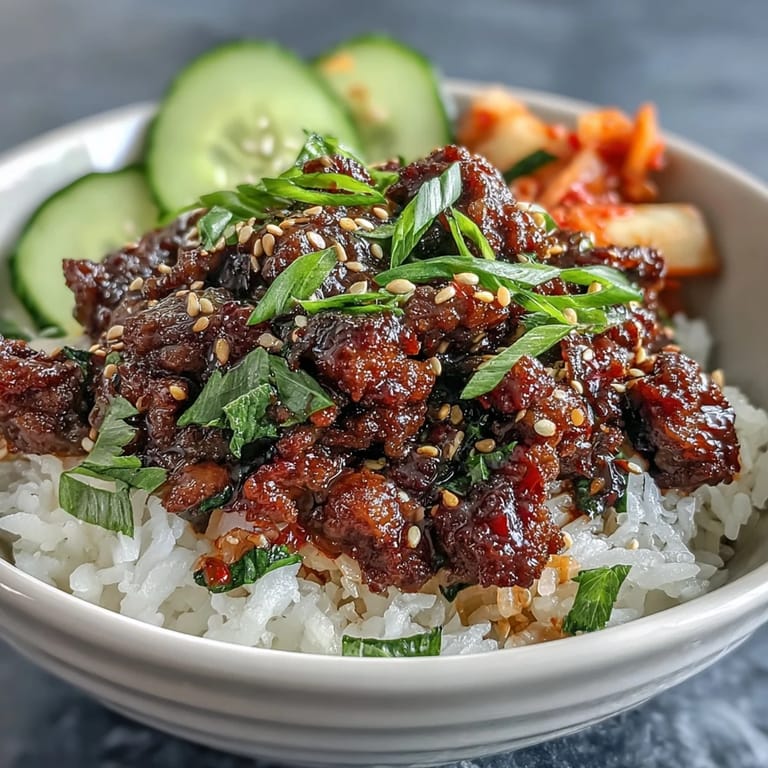
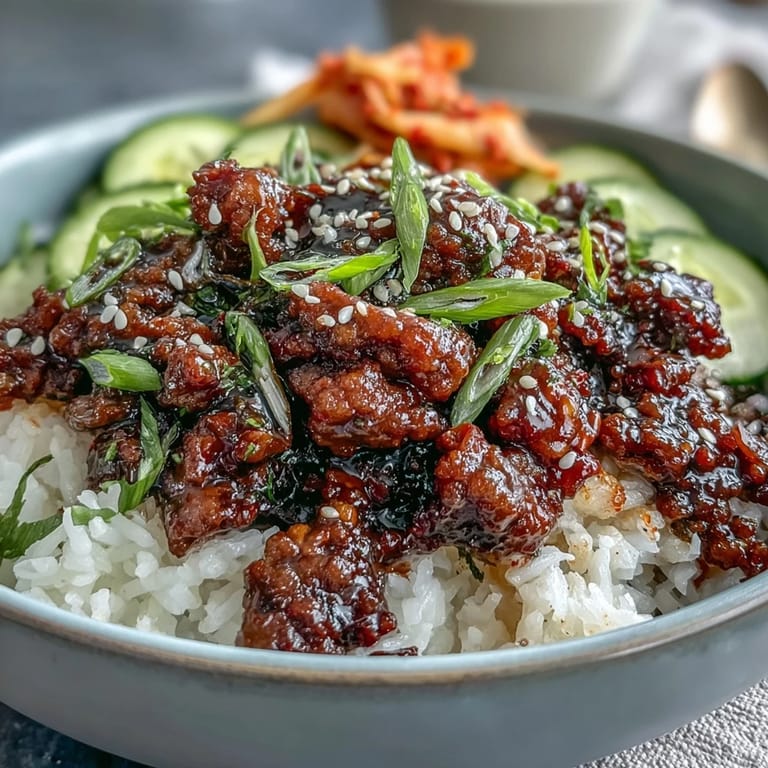
- Start with a base of warm rice in each bowl, then top with a generous portion of the seasoned beef. Arrange your pickled vegetables, fresh cucumber slices, radish, and chopped kimchi around the beef in a way that looks appealing to you.
- Finish and serve immediately:
- Scatter the remaining green onions over each bowl and finish with a sprinkle of toasted sesame seeds. Serve while the rice is still warm and the cold toppings are still crisp for the best contrast.
 Save
Save My friend came back a week later and told me she'd made it for her family, and her eight-year-old nephew asked for seconds without complaining about the spice level, which never happens. That's when I realized this bowl works because it gives everyone control over their own heat level and flavor balance, and there's something genuinely generous about a meal that does that.
The Gochujang Factor
Gochujang is the ingredient that makes this entire dish sing, and it's worth seeking out the real thing at a Korean market if you can. The depth and complexity it brings is completely different from sriracha or other chili sauces, and once you understand how it works in this context, you'll start using it in other dishes. I've learned that gochujang works best when it's mixed with complementary flavors like sweetness and acidity, which is exactly why the brown sugar and rice vinegar in this recipe matter so much.
Building the Perfect Topping Strategy
The beauty of this bowl is that you can adjust the toppings based on what you have on hand or what you're craving that day. Some days I add an extra dollop of kimchi because I want more fermented funk, and other days I go light on it and add extra cucumber for brightness. The key is understanding that each topping serves a purpose: pickled vegetables provide acidity and crunch, kimchi adds fermented complexity and heat, cucumber brings cool freshness, and radish adds peppery bite that rounds everything out.
Make-Ahead and Storage Notes
You can prepare the pickled vegetables up to two days ahead, which makes assembly incredibly quick on busy nights. The beef sauce also reheats beautifully, so you can make a double batch and have lunch ready for the next day. The only thing you'll want to do fresh is assemble the bowls themselves, because the contrast between warm rice and beef against cool, crisp toppings is really what makes this special.
- Store pickled vegetables in an airtight container in the refrigerator, where they'll keep for up to five days.
- Refrigerate leftover beef in a separate container and gently reheat it in a skillet over medium heat before assembling your bowl.
- If you're meal prepping, keep the rice, beef, and toppings in separate containers and assemble only what you're eating that meal.
 Save
Save This bowl has become my go-to when I want to cook something that feels special without spending all evening in the kitchen. Every time I make it, I remember my coworker's contentment at her desk and think about how the best recipes are the ones people actually want to cook again.
Recipe Q&A
- → What does gochujang taste like?
Gochujang is a Korean chili paste with a complex flavor profile combining sweet, savory, and spicy notes. It has a fermented umami richness similar to miso, with a moderate heat level and a slight sweetness from the rice used in its production.
- → Can I make this dish less spicy?
Absolutely. Reduce the gochujang to 1-2 tablespoons for milder heat, or add a tablespoon of brown sugar or honey to balance the spice. You can also serve with additional plain rice or cucumber to cool the palate.
- → How long do the pickled vegetables last?
The quick-pickled carrots and daikon will keep in an airtight container in the refrigerator for up to one week. They actually develop more flavor after marinating for a few hours, so you can prepare them ahead of time.
- → What protein alternatives work well?
Ground chicken or turkey makes an excellent lighter substitution. For a vegetarian version, use crumbled tofu or plant-based ground meat alternative, adjusting cooking time accordingly to avoid overcooking.
- → Is this dish gluten-free?
Traditional gochujang and soy sauce contain gluten. To make this gluten-free, use tamari instead of soy sauce and ensure you purchase a certified gluten-free gochujang. Double-check all ingredient labels, especially the kimchi.
- → Can I meal prep these bowls?
Yes, these bowls meal prep beautifully. Store the beef, rice, pickled vegetables, and fresh toppings in separate containers. Reheat the beef and rice before assembling, and add fresh cucumber and kimchi just before serving for the best texture.