 Save
Save My neighbor brought over a Korean takeout container one rainy afternoon, and I watched her eat straight from it while standing in my kitchen, eyes half-closed in satisfaction. She wouldn't share the restaurant name, just smiled and said I could make something just as good at home if I stopped overthinking it. That bowl changed how I think about weeknight dinners, turning what felt like an exotic restaurant meal into something I could have ready in the time it takes to order delivery.
I made this for my coworker Sarah during a potluck, not realizing she'd never had Korean food before. Watching her take that first spoonful and then immediately go back for another taught me something about food that recipes don't mention, the way a good meal stops conversation for just a moment.
Ingredients
- Lean ground beef (1 lb): The backbone of this bowl, and lean means less grease pooling at the bottom, which lets the sauce coat it properly instead of sliding off.
- Gochujang (2 tbsp): This fermented chili paste is where all the complexity lives, funky and spicy and slightly sweet all at once, a little goes so far.
- Soy sauce (2 tbsp): Use a good one you'd actually drink from a cup, because cheap soy sauce tastes thin and hollow in comparison.
- Brown sugar (1 tbsp): A pinch of sweetness cuts through the heat and salt, balancing everything into something crave-worthy.
- Garlic and ginger (2 cloves and 1 tbsp): Mince these fresh, never from a jar, the difference in fragrance alone tells you why.
- Toasted sesame oil (1 tbsp): This stuff is liquid gold in Korean cooking, dark and nutty and potent, so use just enough to perfume everything.
- Green onions (2 divided): Half goes into the beef for flavor, half finishes the bowl for a fresh bright pop.
- Short-grain rice (4 cups cooked): The slightly sticky texture catches the sauce instead of letting it run off the side of your bowl.
- Edamame (1 cup): These little green pearls add protein and a tender pop, thawed if frozen is perfectly fine.
- Cucumber (1 cup sliced): The cool crispness against warm beef is essential, like a palate cleanser built right into the bowl.
- Carrot (1 cup julienned): Sweet and crunchy, these thin ribbons soak up the sauce and add a subtle brightness.
- Kimchi (1 cup chopped): The tangy fermented kick that ties everything together, use the kind you actually enjoy eating on its own.
- Toasted sesame seeds (2 tbsp): These tiny seeds carry toasted flavor and texture, sprinkle them right before serving so they don't soften.
Tired of Takeout? 🥡
Get 10 meals you can make faster than delivery arrives. Seriously.
One email. No spam. Unsubscribe anytime.
Instructions
- Toast and bloom the aromatics:
- Warm that sesame oil over medium heat until it smells like a Korean restaurant, then add your minced garlic and ginger and listen for the sizzle. One minute is exactly right, any longer and you burn the flavor, any shorter and they taste raw.
- Brown the beef with purpose:
- Crumble the ground beef into the pan and resist the urge to stir constantly, let it sit for thirty seconds to develop a crust before breaking it apart. This takes about five or six minutes total, and you'll know it's ready when there's no pink anywhere and the kitchen smells like dinner.
- Build the sauce:
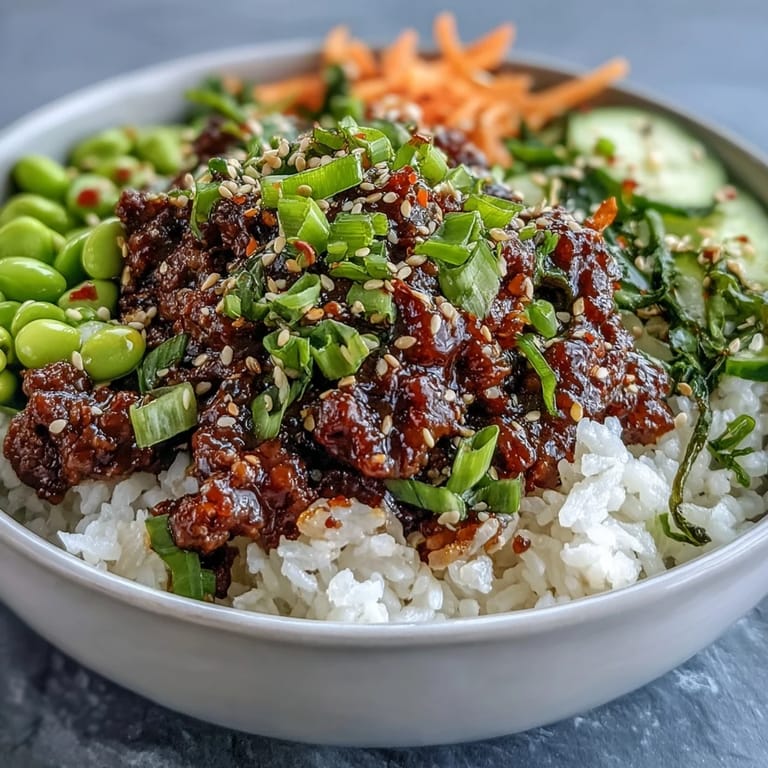
- Stir in the gochujang, soy sauce, and brown sugar all at once, then turn the heat up slightly and let it bubble for two or three minutes. You want to see the sauce darken and thicken slightly, coating each piece of beef like a glossy red jacket.
- Finish with freshness:
- Pull the skillet off the heat and stir in half the green onions, which will wilt just enough from the residual heat to soften their bite without disappearing.
- Assemble with intention:
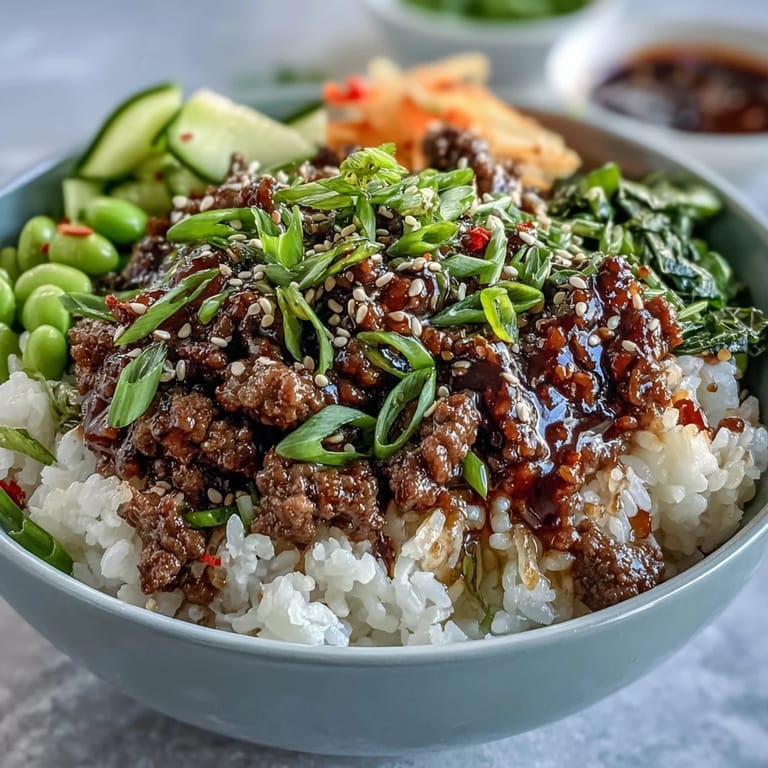
- Divide your warm rice into four bowls, then arrange the warm beef right in the center where everyone can see it. Distribute the edamame, cucumber, carrot, and kimchi around the beef like you're creating something beautiful, because you are.
- Finish and serve:
- Top everything with the remaining green onions and a generous sprinkle of toasted sesame seeds, then bring the bowl to the table while everything is still warm enough to steam slightly.
 Save
Save My daughter asked for this bowl three nights in a row the week we discovered it, and by the fourth request, I realized she wasn't just hungry, she was taking ownership of something she could order exactly how she wanted it. That's when food stops being fuel and becomes a small kind of power.
The Ritual of Building Your Bowl
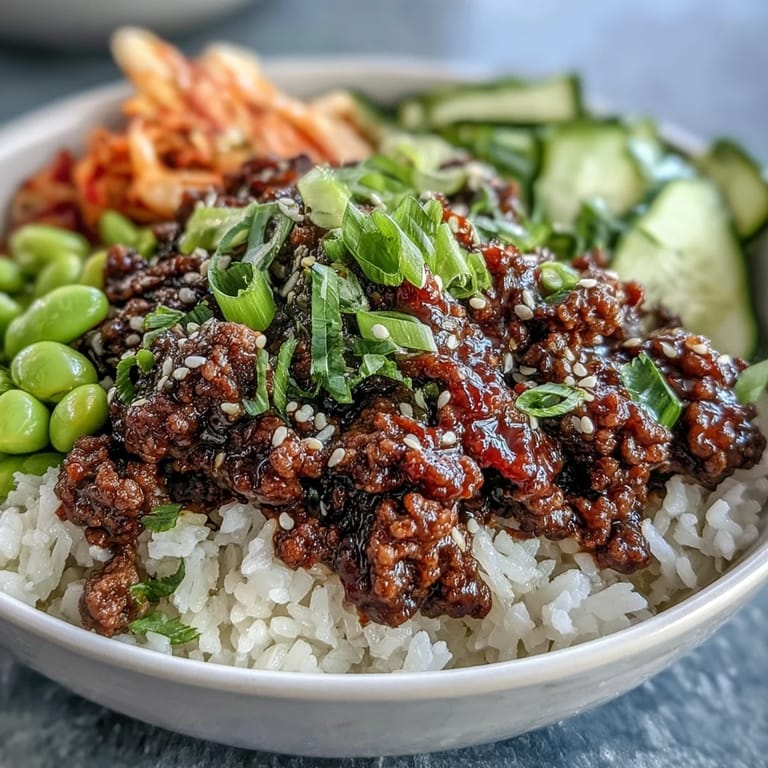
There's something meditative about arranging all those vegetables around the beef, a moment where you're not just cooking but composing. I started doing this deliberately, making sure each bowl was balanced and colorful, and it changed how I felt about eating it. The act of assembly matters almost as much as the ingredients themselves.
Heat and How to Control It
Gochujang brings serious spice, but it's not a sharp burn, it's a warm building heat that lingers. If you're sensitive to spice, start with one tablespoon and taste the sauce before you add the second one. The cool vegetables and rice will also help balance the heat, so don't let the chili paste scare you, you're in control of how much punch this packs.
Make It Your Own
This bowl wants to be customized, and that's part of its charm. I've made it with ground turkey when I was trying to eat lighter, and my vegetarian friend made hers with crispy tofu that she pan-fried in the same sesame oil. The structure stays the same but the details are entirely yours to play with.
- Try adding a fried egg on top for richness and a runny yolk that becomes its own sauce.
- Swap the beef for ground turkey, chicken, or even crumbled baked tofu for a lighter or plant-based version.
- Add sliced radish, shredded cabbage, or blanched broccoli for extra crunch and different textures.
 Save
Save This bowl has become my answer to so many different cravings and moods, somehow satisfying and light at the same time. Make it once and you'll understand why my neighbor kept that restaurant secret to herself.
Recipe Q&A
- → What does gochujang taste like?
Gochujang is a Korean chili paste with a complex flavor profile that combines sweet, savory, and spicy notes. It has a fermented umami richness similar to miso but with a distinct heat and subtle sweetness from the rice malt used in its production.
- → Can I make this bowl spicier?
Absolutely. Increase the gochujang quantity or add Korean chili flakes (gochugaru) for extra heat. You can also drizzle sriracha or serve with pickled spicy peppers on the side for those who enjoy more spice.
- → What can I substitute for ground beef?
Ground turkey, chicken, or pork work well as lighter alternatives. For a vegetarian version, use plant-based crumbles or extra-firm tofu crumbled and cooked until golden. The cooking time may vary slightly depending on your protein choice.
- → Is this bowl meal-prep friendly?
Yes, the components store beautifully. Keep the seasoned beef, rice, and vegetables in separate airtight containers in the refrigerator for up to 4 days. Reheat the beef gently and assemble fresh bowls when ready to eat.
- → What rice works best for this bowl?
Short-grain white or brown rice is traditional due to its sticky texture that helps hold everything together. However, jasmine rice, quinoa, or cauliflower rice make excellent alternatives depending on your preference.
- → Can I make this gluten-free?
Simply replace the soy sauce with gluten-free tamari or coconut aminos. Check your gochujang label, as some brands contain wheat. Many Korean markets now offer certified gluten-free versions.