 Save
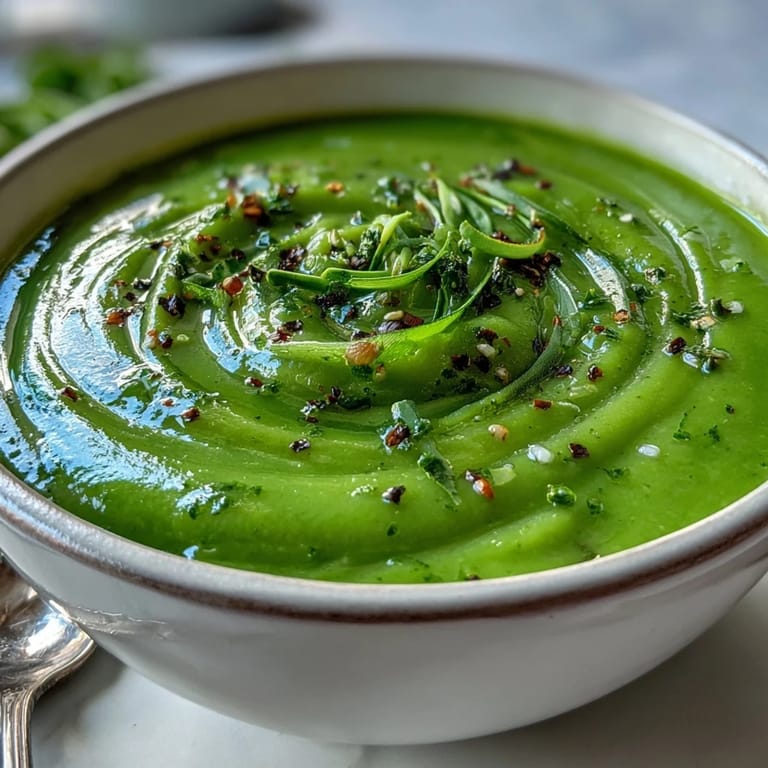
Save There's something about the first warm day of spring that makes me want to abandon heavy soups entirely. I found myself staring at a farmers market haul of impossibly green courgettes and a bag of fresh peas, thinking there had to be something lighter, brighter than what I'd been making all winter. Twenty minutes later, I had a bowl of vibrant green soup with a golden swirl of pesto on top, and I realized spring had finally arrived in my kitchen.
I made this for my neighbor last spring when she was recovering from surgery, and she said it was exactly what she needed—light enough to feel nourishing but substantial enough to feel like real food. Watching her eyes light up when she tasted it reminded me that good cooking isn't always about complexity or showing off; sometimes it's just about meeting someone where they are.
Ingredients
- 2 medium courgettes (zucchini), diced: The star of the show—buy them firm and bright green, and dice them fairly small so they break down beautifully into the broth without turning to mush.
- 1 medium onion, chopped: Use a sweet onion if you can find one; it adds natural sweetness without any sharp bite.
- 2 garlic cloves, minced: Don't skip this, even in small quantities—it's the backbone that keeps this soup from tasting one-note.
- 200 g (1 1/3 cups) frozen or fresh peas: Frozen peas are genuinely better here than fresh in most cases; they're frozen at peak ripeness and add a natural sweetness that fresh spring peas sometimes lack.
- 1 medium potato, peeled and diced: This gives the soup body and helps it blend into something silky rather than thin.
- 1 liter (4 cups) vegetable stock: Use homemade if you have it, but a good quality store-bought stock makes all the difference in a soup this simple.
- 2 tbsp olive oil: Good olive oil, the kind you'd drizzle over finished soup—not the harsh stuff you use for roasting.
- ½ tsp salt, or to taste: Hold back until the end; you'll taste better and adjust as you go.
- ¼ tsp black pepper: Fresh cracked pepper, always.
- 4 tbsp basil pesto: This is where your personality comes in—make your own if you have time, but a quality store-bought pesto is honest work.
- Fresh basil leaves and crusty bread for serving: Both optional but genuinely worth it, especially the bread for soaking up those last spoonfuls.
Tired of Takeout? 🥡
Get 10 meals you can make faster than delivery arrives. Seriously.
One email. No spam. Unsubscribe anytime.
Instructions
- Start with the aromatics:
- Warm your olive oil over medium heat until it shimmers slightly, then add the onion and garlic. You'll know they're ready when the kitchen fills with that warm, toasted smell and everything looks soft and golden, usually 3 to 4 minutes. Don't let them brown—that sharp edge isn't what we want here.
- Build the base:
- Stir in your diced potato and courgette, stirring well so everything gets coated in that olive oil. Give it another 3 minutes, just long enough for the courgette to start softening at the edges and release a bit of moisture.
- Bring it all together:
- Pour in your vegetable stock, let it come to a boil, then turn the heat down to a gentle simmer. The potatoes need about 15 minutes to turn completely tender; you'll know they're ready when a fork slides through without resistance.
- Finish the cooking:
- Add the peas and give everything another 5 minutes at a simmer. The peas will warm through and the whole pot will turn an even brighter green—it's honestly beautiful to watch.
- Blend into smoothness:
- This is the moment everything transforms. Use an immersion blender right in the pot, moving it around slowly until the soup is completely smooth and has that velvety texture that makes you want to keep eating. If you're using a regular blender, work in batches and let the steam escape carefully so it doesn't build up and cause problems.
- Season and finish:
- Stir in 3 tablespoons of pesto, then taste and adjust your salt and pepper. The remaining pesto is reserved for that final swirl, so don't be shy with what goes in now.
- Serve with style:
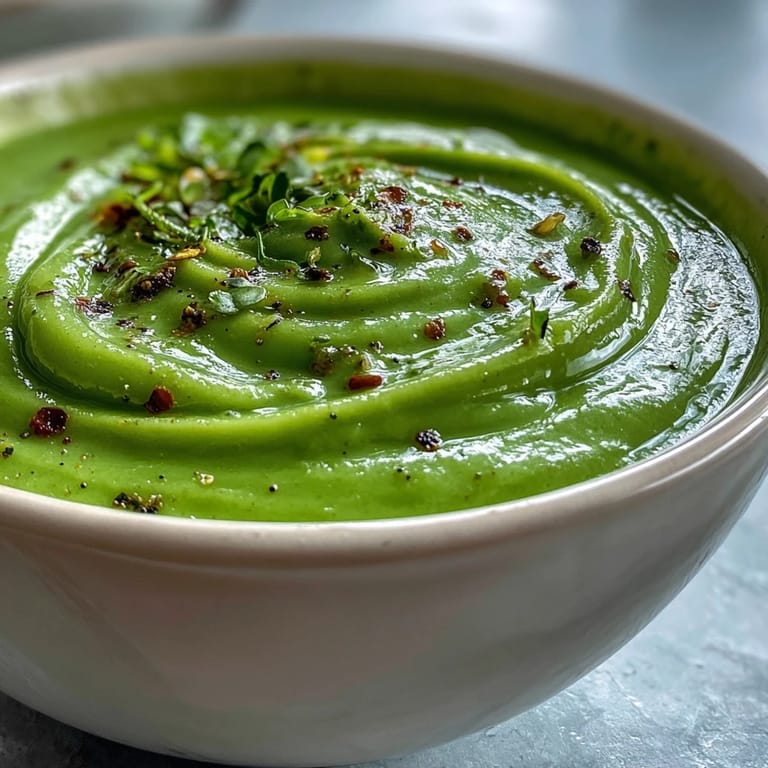
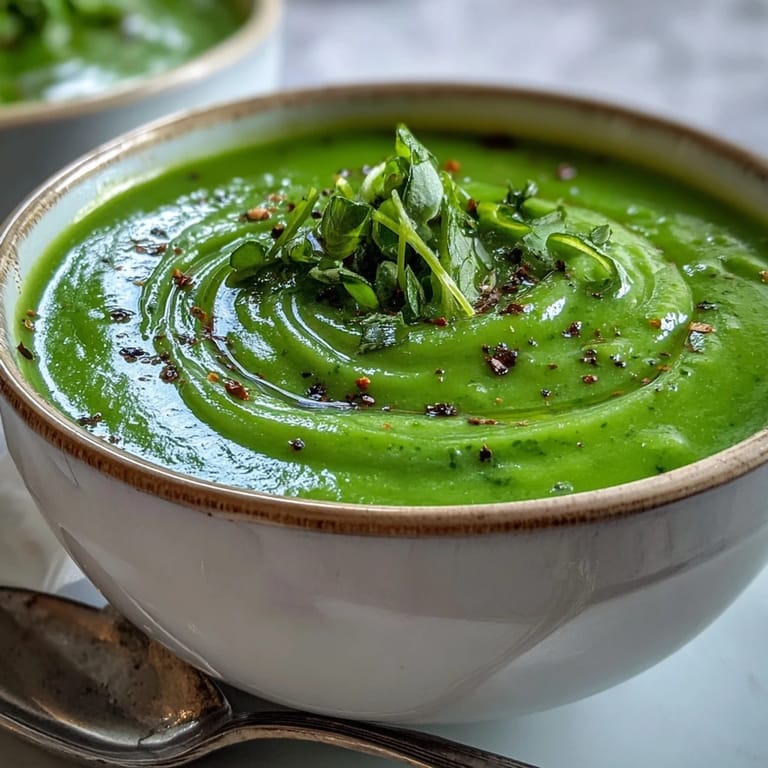
- Ladle into bowls, swirl the remaining pesto on top in a lazy spiral, scatter a few fresh basil leaves if you have them, and serve immediately with crusty bread.
 Save
Save This soup was what got me through a particularly gray week last year when I was convinced nothing felt right. Making it became a quiet meditation, and somehow sharing it with friends who stopped by transformed an ordinary Wednesday into something that felt special.
Variations Worth Trying
Once you know this recipe, you can bend it in so many directions without losing what makes it work. I've swapped the peas for broad beans and gotten something earthier and more substantial, and I've added a splash of cream before blending when I want something more indulgent. Even the vegetables themselves are flexible—sometimes I use half the courgette and add zucchini blossoms if I find them at the market, which adds a surprising delicacy to the whole thing.
Serving and Storage
This soup tastes just as good the next day, maybe even better once the flavors have had time to settle. Store it in an airtight container in the fridge for up to 4 days, and reheat gently on the stovetop rather than blasting it in the microwave, which can make it taste tired. It also freezes beautifully for up to 3 months—just leave out the fresh pesto swirl until after you've thawed and warmed it through.
The Seasonal Side of Things
What makes this recipe so useful is how easily it follows the seasons. In spring, lean into the fresh herbs and bright flavors as written. Come summer, chill it completely and serve it cold with a touch more pesto and a squeeze of lemon—it becomes something almost entirely different, light enough to eat after a long hot day. The versatility is part of why I keep coming back to it, year after year, each time discovering something new about what it can be.
- Serve it warm with good bread in cooler months, or chilled with a yogurt dollop when the heat arrives.
- Double the pesto if you love herbal flavors, or scale it back if your household prefers subtlety.
- Make a big batch when courgettes are cheap and freeze portions for those days when you need something nourishing but have no energy to cook.
 Save
Save This soup reminds me why simple cooking is often the most satisfying—you end up with something real and good in 40 minutes, and somehow that feels like a small miracle. Make it often, adjust it to your taste, and it'll become one of those recipes you reach for without even thinking.
Recipe Q&A
- → Can I make this soup vegan?
Yes, simply use vegan pesto instead of traditional pesto. Most store-bought vegan pestos are made without cheese or dairy, making the entire soup plant-based.
- → Can I serve this soup cold?
Absolutely! This soup is excellent served chilled as a refreshing summer dish. Simply refrigerate after blending and serve cold with a drizzle of pesto on top.
- → What can I substitute for peas?
Broad beans make an excellent alternative to peas, offering a similar sweetness and texture. You can also try edamame beans for a protein boost.
- → How do I make the soup creamier?
Add a splash of double cream, crème fraîche, or coconut milk before blending. This creates a richer, more luxurious texture while maintaining the fresh vegetable flavors.
- → Can I freeze this soup?
Yes, this soup freezes well for up to 3 months. Freeze before adding the pesto swirl, then stir in fresh pesto when reheating for the best flavor.
- → Is this soup gluten-free?
The soup itself is naturally gluten-free when made with gluten-free pesto. Check your pesto label to ensure it contains no gluten-containing ingredients, and serve with gluten-free bread if needed.