 Save
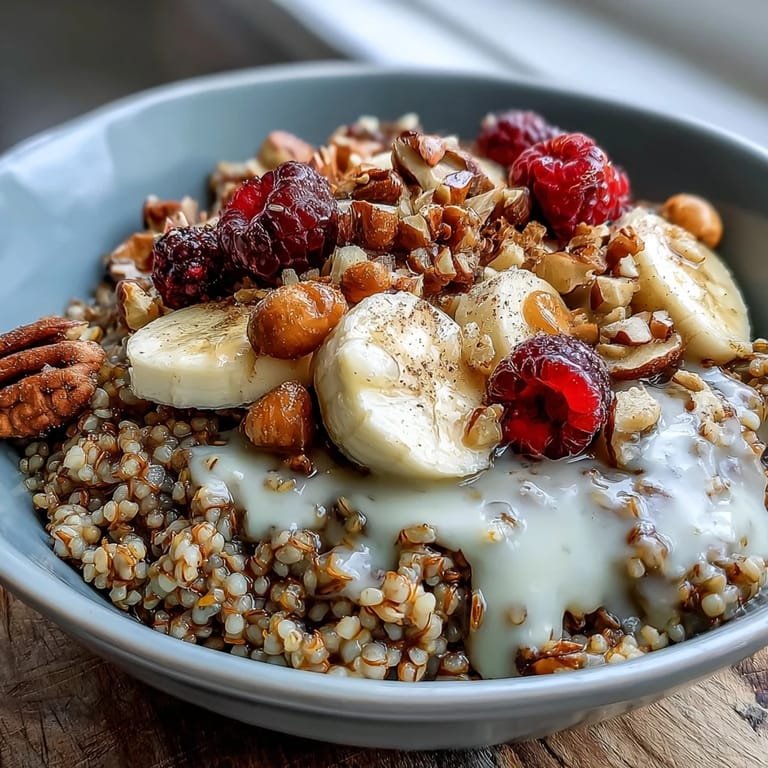
Save There's something almost meditative about the sound of buckwheat groats hitting the bottom of a pot, that gentle percussion as they tumble under cold water. I discovered these little pyramids one foggy morning when I was desperate for something that didn't make me feel heavy, something that wouldn't derail my plans for the day ahead. What struck me most wasn't just how quickly they cooked, but how they seemed to absorb whatever personality I gave them—nutty, grounding, and honest in a way that most breakfast grains never managed.
I made this for my sister after she mentioned her stomach had been bothering her for weeks, and watching her face light up when she tasted how nutty and substantial it was—without any of the usual heaviness—that's when I knew this wasn't just another breakfast bowl. She ate it in near silence, which is saying something for someone who usually talks through meals.
Ingredients
- Buckwheat groats (raw, hulled), 1 cup: These aren't wheat at all, which is the beautiful trick—they're a seed with a mild, almost chestnut-like flavor that deepens as they cook, and they're naturally complete proteins on their own.
- Water, 2 cups: The simple ratio is forgiving and reliable; the groats drink it up completely, so you won't end up with a watery mess.
- Salt, 1/4 teaspoon: Just enough to wake up the subtle nuttiness without making anyone ask what that flavor is.
- Mixed nuts (almonds, walnuts, pecans), 1/2 cup roughly chopped: Raw or roasted both work, but roasted gives you that crack and crunch that makes the whole bowl feel deliberate and considered.
- Fresh fruit (berries, banana, apple, or pear), 1 cup diced: Whatever's in season where you are—the acidity and brightness cut through the earthiness and remind your palate it's morning.
- Honey or maple syrup, 2 tablespoons optional: A light drizzle is enough; you're not trying to turn breakfast into dessert, just gently sweetening what's already there.
- Ground cinnamon, 1/2 teaspoon optional: This spice has a way of making everything taste intentional and warm, like someone cared while cooking.
- Milk or plant-based milk, 1/2 cup optional: A splash at the end creates a porridge-like consistency that makes the whole bowl feel luxurious and easier to eat.
Tired of Takeout? 🥡
Get 10 meals you can make faster than delivery arrives. Seriously.
One email. No spam. Unsubscribe anytime.
Instructions
- Rinse and prepare:
- Run the buckwheat under cold water in a fine mesh strainer, swirling it gently with your fingers until the water runs clear—you're washing away the dustiness that can make them taste slightly bitter. This small step matters more than you'd think.
- Combine and heat:
- Pour the rinsed groats into a medium saucepan with water and salt, then bring it to a rolling boil over medium-high heat. You'll notice the groats start to smell toasted and nutty once the heat hits them.
- Simmer gently:
- Lower the heat to low, cover the pot, and let them bubble away for ten to twelve minutes until the water is completely absorbed and the groats are tender but still have a tiny bit of texture. Resist the urge to peek too often; the steam is doing the work.
- Rest and fluff:
- Turn off the heat and let them sit, still covered, for five minutes—this allows them to firm up slightly. Then take a fork and gently fluff them apart so they don't clump into a dense mass.
- Assemble your bowl:
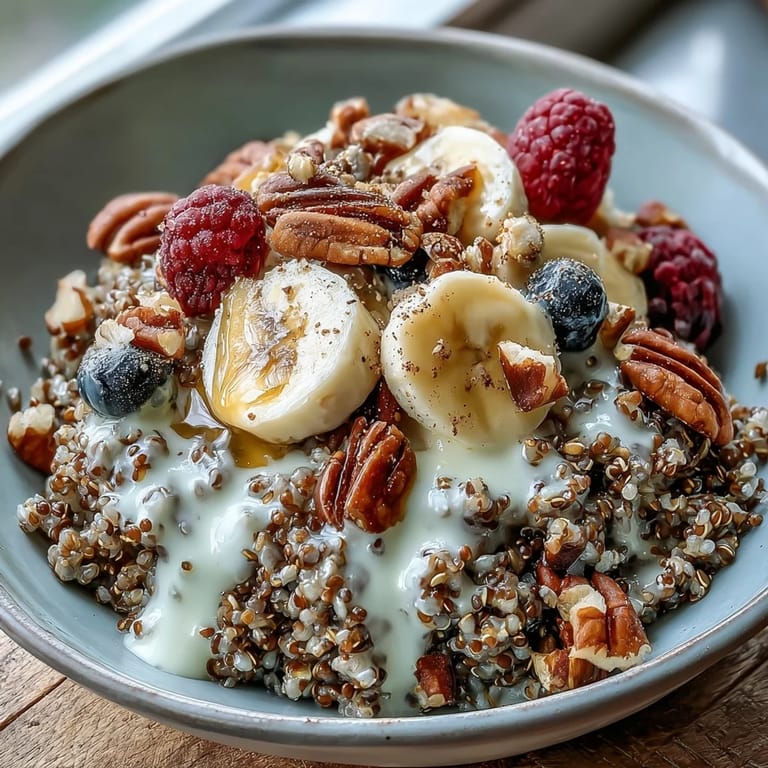
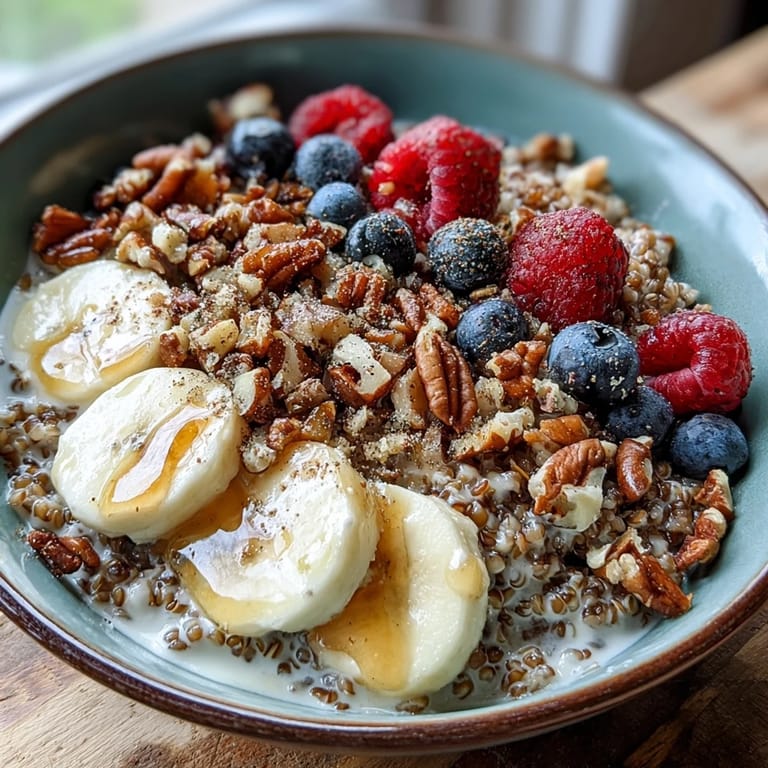
- Divide the warm buckwheat between two bowls, and then comes the fun part: scatter your nuts across the top, letting some fall into the groats and some stay on the surface for crunch. Layer your fruit next, creating little pockets of brightness.
- Finish and serve:
- Drizzle with honey or maple syrup if you're using it, dust with cinnamon if that's calling to you, and pour a splash of milk around the edges. Serve it while it's still warm enough to soften the fruit slightly but not so hot that it burns your tongue.
 Save
Save There's a moment in cooking when practicality becomes something more—when you're standing in your kitchen on an ordinary Thursday, and a simple bowl of breakfast suddenly feels like self-care, like you're choosing yourself and your body with every spoonful. That's what this dish became for me and for anyone I've served it to.
Why Buckwheat Changed My Breakfast Routine
For years I rotated between oats and yogurt, never quite satisfied, always hungry again by ten. Buckwheat arrived in my life like a quiet friend who just understood—it kept me full, kept me steady, and never made me feel sluggish or overstuffed. The fact that it's technically a seed, not a grain, somehow made it feel like I was eating something closer to whole, something less processed, even though all I did was boil it.
The Art of Toppings and Texture
The toppings are where you get to express yourself, where the bowl transforms from just nutritious to actually exciting. I've learned that the contrast between the soft, yielding groats and the sharp crack of nuts is everything—it's what keeps you engaged, what makes you slow down. Some mornings I go minimal with just berries and a whisper of honey, other mornings I load it up with three kinds of nuts and every fruit I can find.
Making It Your Own
This recipe is a platform for whatever your morning needs are, whatever your body is telling you it wants. I've added chia seeds for extra omega-3s on days when I knew I'd be thinking hard, shredded coconut when I wanted something tropical, even a handful of granola when I was craving something indulgent but still felt like breakfast. The buckwheat holds whatever you add to it without losing its essential character.
- If you're sensitive to nuts, seeds like sunflower or pumpkin work brilliantly and give you that same satisfying crunch.
- Leftover cooked buckwheat keeps in the refrigerator for three days and reheats beautifully with just a splash of milk and a minute on the stovetop.
- For a make-ahead option, you can cook the buckwheat the night before and simply reheat and top in the morning.
 Save
Save This breakfast isn't complicated or fancy, but it's real and it sustains you in a way that matters. Make it for yourself on a morning when you deserve to eat well, and you might find it becomes a quiet ritual that anchors your day.
Recipe Q&A
- → Are buckwheat groats gluten-free?
Yes, despite the name, buckwheat is completely gluten-free. It's actually a fruit seed related to rhubarb, not wheat, making it perfect for those avoiding gluten.
- → Do I need to soak buckwheat groats before cooking?
No soaking is required. Simply rinse the groats thoroughly under cold water, then simmer them with water and salt for about 10-12 minutes until tender.
- → Can I make this breakfast ahead of time?
Absolutely. Cooked buckwheat stores well in the refrigerator for several days. Reheat with a splash of milk and add fresh toppings just before serving.
- → What fruits work best with buckwheat groats?
Berries, sliced bananas, diced apples, or pears all pair wonderfully. The tartness of berries balances the earthy buckwheat, while bananas add natural creaminess.
- → Is this breakfast high in protein?
Buckwheat provides about 9 grams of protein per serving. You can boost the protein content by adding Greek yogurt, extra nuts, or a scoop of protein powder.
- → Can I use roasted buckwheat (kasha) instead?
Yes, kasha works well and offers a deeper, toastier flavor. The cooking time remains similar, though you may want to reduce slightly as the groats are already toasted.