 Save
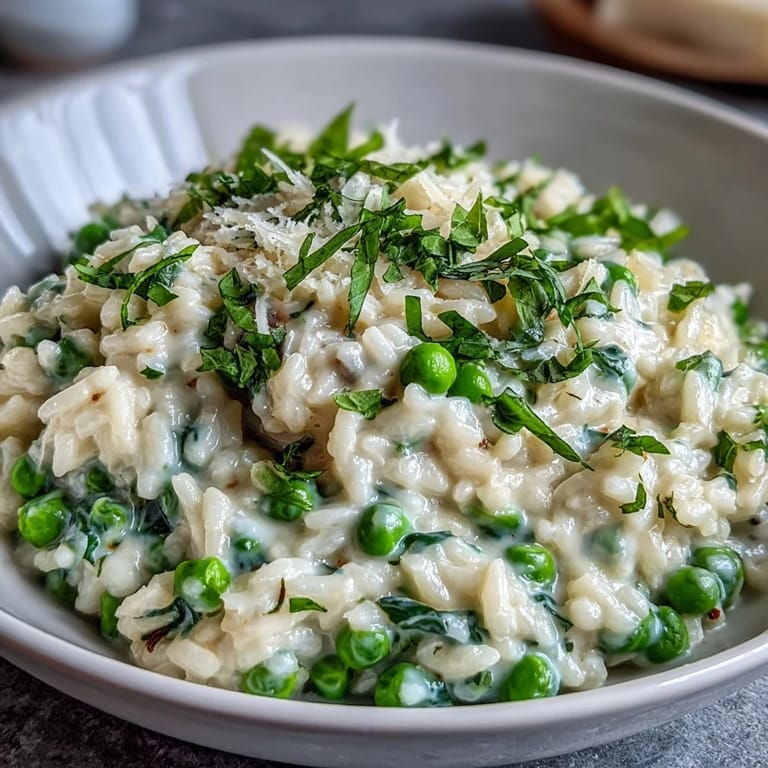
Save My neighbor stopped by one April evening with a bunch of farmers market mint so fragrant it filled the whole kitchen, and I suddenly remembered why spring risotto felt like the only right answer for dinner. The green of those fresh peas caught the evening light, and somehow that one moment shifted how I thought about weeknight cooking—not as something to rush through, but as a reason to slow down and actually taste the season. That night turned into hosting four people around my small table, and watching them eat something so vibrantly green and creamy felt like sharing something real.
I made this for the first time when I was trying to prove to myself that I could cook something Italian without ordering it, and the constant stirring became meditative instead of exhausting. Halfway through, my partner walked in, smelled the mint and butter toasting together, and just sat down at the counter to watch. By the time the risotto was creamy and the peas had turned that perfect bright green, the kitchen felt warm and full of something I couldn't quite name but recognized as home.
Ingredients
- Fresh or frozen green peas (1 cup): If you can find fresh ones at a farmers market or spring vegetable stand, they make all the difference in both flavor and how they look on the plate—but frozen works beautifully too and honestly saves you from blanching.
- Arborio rice (1 1/2 cups): This isn't just any rice; the starch in Arborio is what makes risotto creamy, and it holds its shape while releasing that signature silkiness.
- Vegetable stock (4 cups, kept warm): Cold stock will shock the rice and mess up your timing, so keep it gently simmering on a back burner—this small step changes everything.
- Dry white wine (1/2 cup): Choose something you'd actually drink, because the flavor carries through the whole dish and becomes part of its character.
- Unsalted butter (3 tbsp, divided): Butter is the backbone here, so use good stuff and resist the urge to skip it or go light—risotto needs fat to be creamy.
- Freshly grated Parmesan (1/2 cup, plus extra): Pre-grated will seize up and clump when it hits the heat, so grate it fresh right before you finish the dish and watch how differently it melts in.
- Fresh mint leaves (1/4 cup, finely chopped): Mint is what turns this from nice to memorable, so don't just sprinkle it on top—fold it in gently at the very end so the heat releases its essential oils without killing them.
- Fresh flat-leaf parsley (2 tbsp, optional): This adds earthiness and color complexity if you want it, but honestly the mint is the star.
- Lemon zest (from 1 lemon): A small amount of zest lifts the whole dish with brightness, cutting through the richness just enough to keep it from feeling heavy.
- Salt and freshly ground black pepper, to taste: Taste as you go because the stock, cheese, and butter all contribute salt, and you're better off adding little by little than over-salting at the end.
Tired of Takeout? 🥡
Get 10 meals you can make faster than delivery arrives. Seriously.
One email. No spam. Unsubscribe anytime.
Instructions
- Start with butter and aromatics:
- Melt 2 tablespoons of butter in a large saucepan over medium heat, then add your finely chopped onion and let it soften and turn translucent—this usually takes about 4 minutes and you'll know it's ready when it's no longer sharp-smelling. Stir in the minced garlic and cook for just 1 minute more, until it's fragrant but not brown, because burnt garlic tastes bitter and will haunt the whole dish.
- Toast the rice:
- Add the Arborio rice and stir it constantly for about 2 minutes so each grain gets coated in butter and toasts slightly—you're looking for a subtle nutty smell and a slightly translucent appearance at the grain edges. This step is what gives risotto its structure and keeps it from turning into porridge.
- Add the wine:
- Pour in the white wine and stir until it's almost completely absorbed into the rice—this happens faster than you'd expect, usually in 2 to 3 minutes. The wine adds flavor and acidity that balances the richness of the butter and cheese coming later.
- Begin the stock addition ritual:
- Start adding warm stock one ladle at a time, stirring frequently and waiting until most of the liquid is absorbed before adding the next ladle—this gradual process usually takes 18 to 20 minutes total and is the heart of risotto making. You'll watch the rice slowly release its starch and transform the liquid into something creamy and almost silky, and there's something almost hypnotic about this rhythm of adding, stirring, and waiting.
- Add the peas at the right moment:
- During the last 5 minutes of cooking, stir in the peas and let them heat through gently—they'll stay bright green and tender if you don't cook them any longer. This timing keeps them from turning army-green and mushy, which matters more than you'd think.
- Finish with mint, cheese, and butter:
- Remove from heat and stir in the remaining 1 tablespoon of butter, freshly grated Parmesan, finely chopped mint, parsley if you're using it, lemon zest, and a pinch of salt and pepper. The heat will make everything meld together, and you'll feel the risotto relax into its final creamy state—taste it now and adjust seasoning because this is your last chance.
- Serve immediately with ceremony:
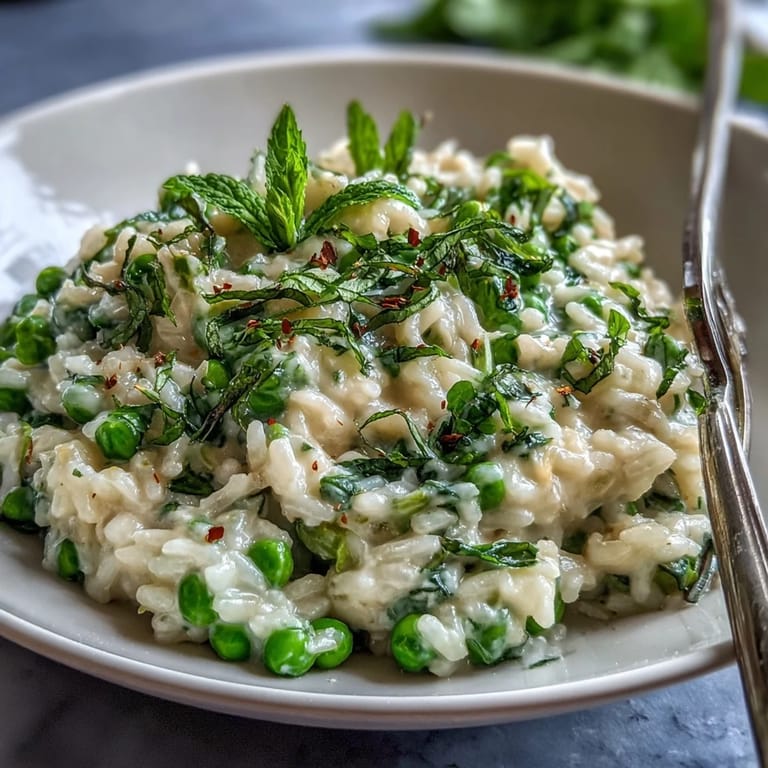
- Spoon the risotto into bowls while it's still warm and creamy, then finish each one with a scatter of extra Parmesan and a few fresh mint leaves. Risotto waits for no one, so have your guests ready and your plates warm.
 Save
Save That first dinner party taught me something I still think about: the risotto wasn't special because it was complicated, but because it asked me to be present for 30 minutes while making it. My guests slowed down too, the way people do when food is made with attention instead of hurry, and that became the real memory.
The Secret Language of Risotto
Risotto speaks to you if you listen—the sound of your wooden spoon scraping against the pan changes as the rice absorbs liquid, getting quieter and more velvety. When you first start cooking, it sounds almost grainy and rough, but by the end it's smooth and almost whisper-quiet, and that's when you know you're getting close to done. The rice should move across the plate like lava when you tilt the bowl, never stiff or soupy, just naturally flowing.
Why This Works as Spring Dinner Party Food
Most main dishes ask you to choose between impressive and relaxed, but risotto does both at once because you can prep everything before guests arrive and then spend those last 30 minutes cooking while people sit nearby with drinks. There's something magical about cooking in front of people—it slows the evening down, makes conversation easier, and turns the kitchen into the actual center of the party. Plus, a single pot means minimal cleanup when everyone leaves, which might be the most impressive thing of all.
Making It Truly Your Own
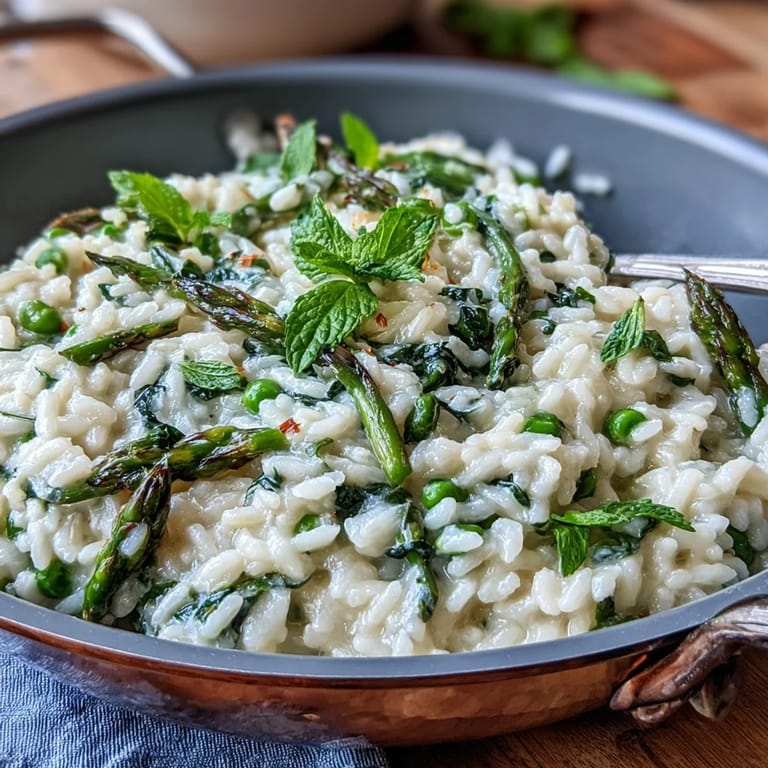
This risotto is a template as much as it is a recipe, which means you can swap the peas for asparagus in late spring, or add some saffron threads to the stock for earthiness, or finish with truffle oil if you're feeling extravagant. The mint-Parmesan combination is classic and worth respecting, but once you understand how risotto works, you'll find yourself riffing on it. I've made versions with roasted mushrooms and thyme, with zucchini and basil, even with fresh corn when summer hits, and they're all recognizably risotto while being completely their own thing.
- Drizzle a little good-quality olive oil on top right before serving if you want extra richness and a hint of peppery finish.
- Keep a small cup of warm stock standing by in case you need to loosen the risotto just before serving—sometimes it sets slightly while plating.
- Make sure your serving bowls are warm because risotto cools quickly and loses its appeal the moment it's lukewarm.
 Save
Save This risotto proved to me that the best meals aren't about following rules perfectly, but about understanding why those rules exist so you can make something that feels entirely your own. Make it once to learn it, then make it again to love it.
Recipe Q&A
- → What type of rice is best for this dish?
Arborio rice is ideal due to its high starch content, which gives the dish a creamy texture without losing its shape.
- → Can I use frozen peas instead of fresh?
Yes, frozen peas can be used as a convenient substitute and should be added towards the end of cooking to retain their color and texture.
- → How do I ensure the risotto is creamy and not mushy?
Gradually adding warm stock and stirring constantly helps release the rice's starch for creaminess while keeping the grains firm.
- → What can I use if I don't have white wine?
Vegetable stock or a splash of lemon juice can be used as alternatives to add acidity and depth.
- → Is it necessary to stir constantly during cooking?
Frequent stirring prevents the rice from sticking and helps release starch, creating the desired creamy consistency.