 Save
Save There's something about a pot of chicken and rice soup that stops everything else from mattering. My neighbor Sarah brought over a steaming bowl one gray afternoon when I was buried under work, and I remember sitting at my kitchen table, steam fogging my glasses, tasting something that felt less like dinner and more like a small act of kindness. That's when I understood the real magic of this soup—it's not fancy or complicated, but it carries weight because it actually nourishes you, body and mood together.
I made this for my dad during his recovery from surgery, when he was tired of feeling fragile and wanted something that tasted like home. He had thirds and asked for the recipe in a way that meant he wanted to make it himself someday. That's when I knew this wasn't just soup—it was something that could do real work in someone's life.
Ingredients
- Boneless, skinless chicken breasts (about 400 g), cut into bite-sized pieces: Cutting them smaller means they cook faster and distribute their flavor throughout the broth; skip the fancy cuts and stick with budget-friendly breasts.
- Medium onion, finely chopped: This is your flavor foundation, so take an extra moment to mince it small so it melts into the broth rather than sitting in chunks.
- Carrots and celery stalks, sliced: These two are the backbone of any good soup; the carrots add subtle sweetness while celery brings a quiet earthiness that nobody tastes directly but everyone notices is missing.
- Garlic cloves, minced: Three cloves gives the soup backbone without overpowering it; mince them right before adding so their fragrance is at its peak.
- Long-grain white rice, rinsed: Rinsing removes the starch coating and prevents the soup from becoming gluey; don't skip this step even though it feels like extra work.
- Low-sodium chicken broth (6 cups): Low-sodium gives you control over the final salt level, which matters because this soup reduces as it cooks and flavors concentrate.
- Olive oil or unsalted butter: Either works beautifully; butter adds richness, olive oil keeps it lighter and dairy-free if that matters to you.
- Dried thyme and bay leaf: These two herbs build a quiet, herbaceous depth that whispers rather than shouts; they're worth their small effort.
- Black pepper and salt: Add salt in stages throughout cooking because the broth is already seasoned; you're building, not drowning.
- Fresh parsley: This is your final grace note—it adds a bright, grassy contrast that lifts the whole bowl and makes it feel intentional rather than accidental.
- Lemon wedges: A small squeeze of acid at the end opens up all the flavors and makes the soup taste more of itself, sharper and cleaner.
Tired of Takeout? 🥡
Get 10 meals you can make faster than delivery arrives. Seriously.
One email. No spam. Unsubscribe anytime.
Instructions
- Get your vegetables ready:
- Heat the olive oil or butter in a large pot over medium heat, then add the onion, carrots, and celery. Sauté for about five minutes, stirring occasionally, until the vegetables soften and the onion begins to turn translucent—you'll know it's right when your kitchen smells like home cooking.
- Wake up the garlic:
- Add the minced garlic and cook for just one minute until fragrant; this brief moment transforms the raw garlic into something mellow and sweet.
- Brown the chicken lightly:
- Stir in the chicken pieces and cook for two to three minutes, just until they're lightly browned on the outside—they don't need to be cooked through yet since they'll finish in the broth. This small step adds color and subtle depth.
- Build your soup base:
- Add the rinsed rice, chicken broth, thyme, bay leaf, salt, and pepper, stirring everything together so nothing settles at the bottom. Take a moment to smell the steam rising—this is the point where it transforms from ingredients into soup.
- Simmer until everything is tender:
- Bring to a boil, then lower the heat to a gentle simmer, cover the pot, and cook for twenty to twenty-five minutes, stirring occasionally. You're listening for the gentle bubbling sound and watching for the rice grains to turn from translucent to opaque, which tells you the chicken is cooked through and the rice has absorbed the broth's flavor.
- Taste and adjust:
- Remove the bay leaf and taste the soup carefully, adding more salt and pepper if needed. This is your moment to own it—some pots need more seasoning than others depending on your broth and how much liquid has cooked away.
- Finish with brightness:
- Stir in the fresh parsley right before serving so it keeps its vibrant color and fresh flavor. The green flakes against the golden broth make it look like you spent more time than you actually did.
- Serve with intention:
- Ladle into bowls and set out lemon wedges on the side, letting people squeeze in as much as they like. The acidity lifts everything and makes the soup feel complete.
 Save
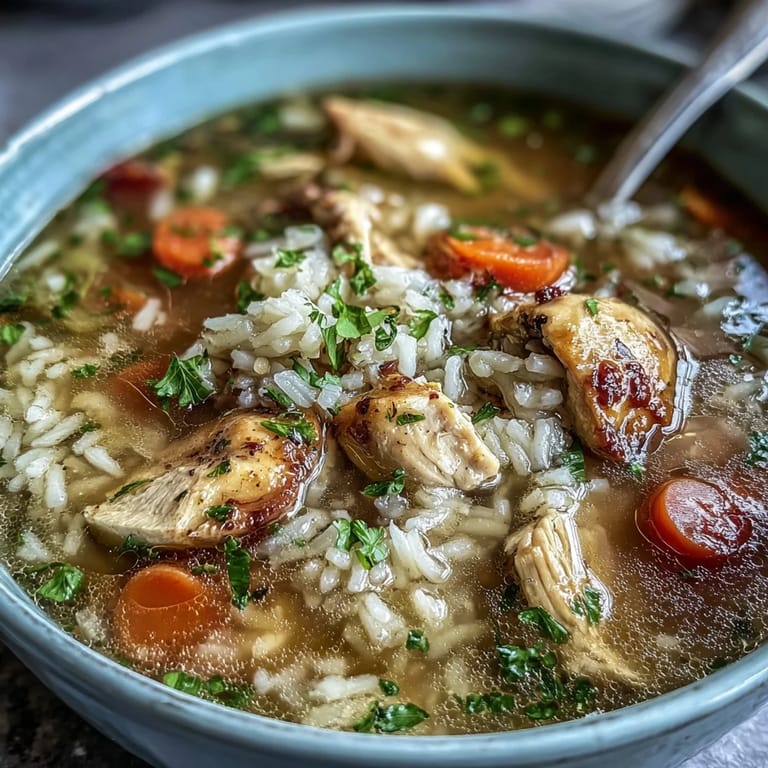
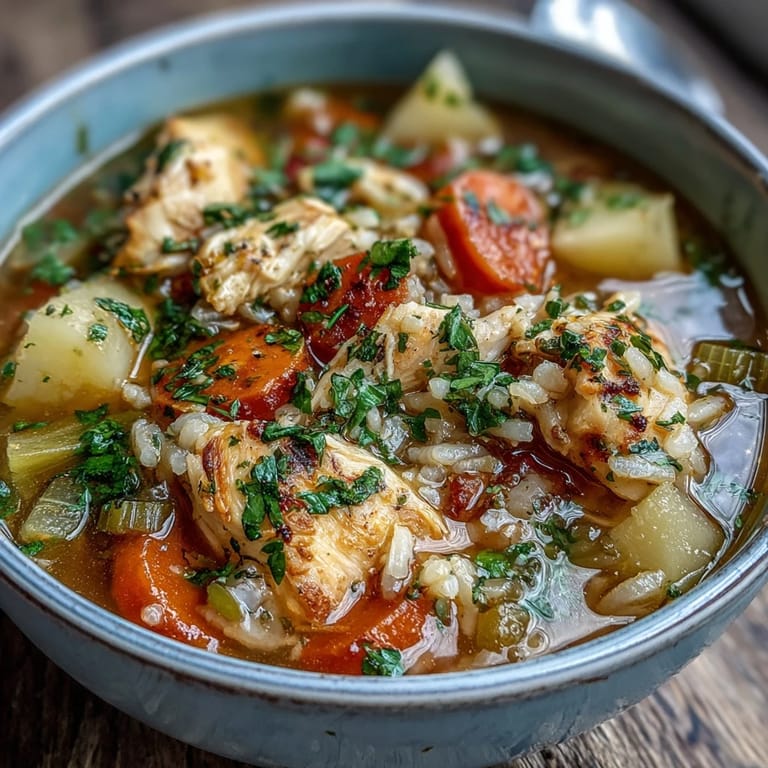
Save My kids now ask for this soup by name, which still surprises me because they're suspicious of most home cooking. But there's something about a bowl of soup with visible rice and chicken and vegetables that feels honest to them, no hidden agenda, just food that tastes like food.
Why This Soup Works Every Time
The beauty of one-pot soups lives in their forgiveness and their simplicity. Everything goes into the same vessel, the broth carries and protects each ingredient, and there's very little that can go truly wrong. I've made this soup tired, distracted, and rushed, and it comes out tasting like I spent hours on it. That's the kind of recipe that earns a permanent spot in your cooking rotation.
Making It Your Own
The basic structure here is strong enough to handle variations without falling apart. I've added spinach in the last five minutes when I wanted something greener, thrown in a Parmesan rind for deeper savory notes, and even stirred in leftover roasted vegetables when the crisper drawer needed clearing. The soup welcomes these additions because it's confident in its foundation.
Storing and Reheating
Leftovers will thicken as the rice continues absorbing liquid, which is actually beautiful if you like a thicker, more substantial soup—just add extra broth when reheating if you prefer it thinner. This soup freezes remarkably well and tastes even better the next day after flavors have time to settle and deepen together.
- Store in airtight containers in the refrigerator for up to four days, or freeze for up to three months for those nights when you need dinner without thinking.
- Reheat gently over medium heat rather than blasting it with high temperature, which keeps the chicken tender and the broth silky.
- Add fresh parsley only after reheating so it stays bright green and fresh-tasting rather than dull and cooked down.
 Save
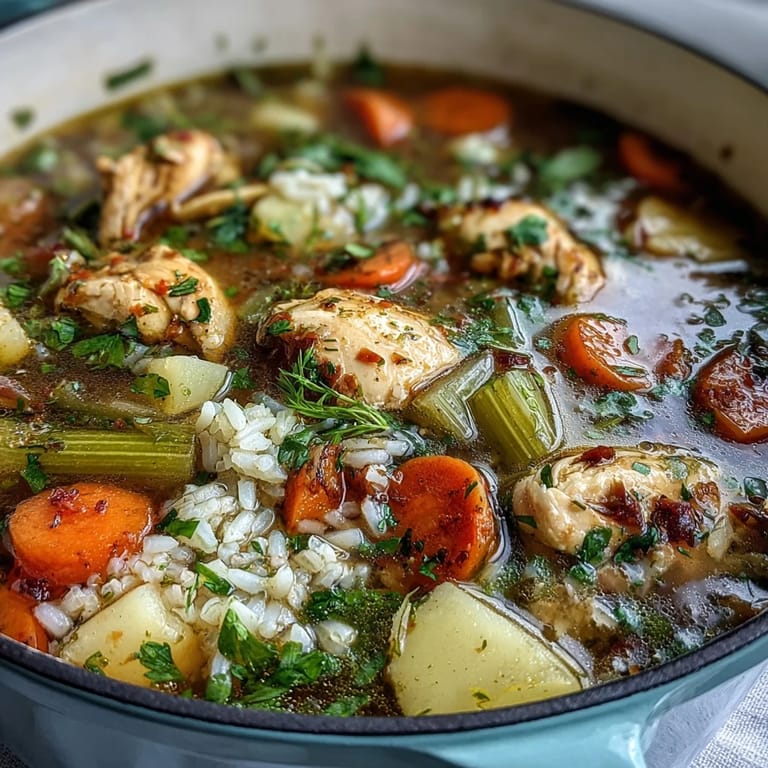
Save This soup has become my answer to so many moments—when someone needs feeding, when I need comfort, when I want to prove that good food doesn't require stress or showmanship. It's honest and kind, which is maybe the best thing any recipe can be.
Recipe Q&A
- → Can I substitute brown rice for white rice?
Yes, brown rice can be used but will require an additional 15–20 minutes of simmering for proper tenderness.
- → What herbs enhance the flavor of this soup?
Thyme and bay leaf provide aromatic depth, while fresh parsley added at the end brightens the flavors.
- → Is it possible to add greens to this dish?
Spinach or kale can be stirred in during the last five minutes of cooking to add extra nutrients and color.
- → How can I adjust the soup's seasoning?
Taste after simmering and adjust salt, pepper, or fresh herbs according to preference for balanced flavor.
- → What should I use to sauté the vegetables?
Olive oil or unsalted butter works well to soften the onion, carrots, and celery before combining with other ingredients.
- → Can I prepare the soup without dairy?
Yes, using olive oil instead of butter keeps the dish dairy-free while maintaining richness.